Lutron GRAFIK Eye 4000 Replacement Guide (2026): Why You Can't Just Upgrade to New Lutron
The Problem Nobody Tells You About GRAFIK Eye 4000
When a GRAFIK Eye 4000 control unit fails in your conference room or lobby, the instinct is to call Lutron and get it upgraded to a modern system. The problem is what happens when you make that call.
Lutron’s current commercial platforms — HomeWorks QSX, Athena, and Quantum — all use the QS communications protocol. The GRAFIK Eye 4000 runs GRX, a completely separate proprietary protocol developed in the 1990s. These two protocol families cannot communicate directly. There is no software bridge, no firmware update, and no adapter that makes a GRX control unit speak QS. The same full-platform-migration reality faces owners across the entire discontinued GRAFIK Eye family — see our complete GRAFIK Eye replacement guide for a series overview.
The result: you are not doing an upgrade. You are doing a full platform migration, regardless of whether one panel failed or twenty.
This is the technical fact that most replacement guides don’t lead with — and it’s the fact that determines everything about your project cost, timeline, and vendor selection.
What Is a GRAFIK Eye 4000 System?
The GRAFIK Eye 4000 was Lutron’s flagship commercial dimming platform for multi-zone lighting control in office buildings, hospitality venues, restaurants, houses of worship, and conference facilities. It was designed for 3 to 24 zones of dimmed lighting per main unit, with scene control, occupancy sensor integration, and time-clock scheduling.
The hardware stack you’re working with:
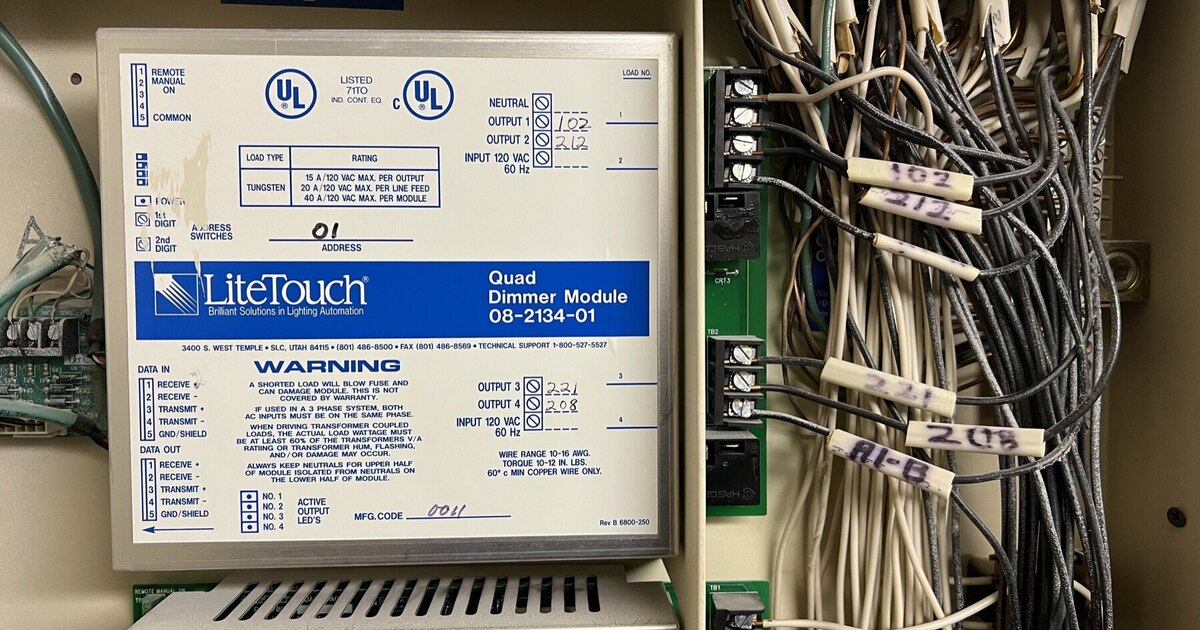
GRX Control Units (the brain on the wall or in the rack): Models like the GRX-4103, GRX-4104, GRX-4106, and GRX-4108 handle 3–8 zones each. These are the primary failure point. Parts are no longer manufactured; aftermarket supply through Radwell and similar distributors is dwindling. Expect to pay a premium for used units if you find them.
LP Dimming Panels (rack-mounted power hardware): The LP series panels are the load-carrying hardware — they receive the dimmed signal from the GRX control units and actually control current to fixtures. These are Lutron’s highest-quality commercial dimmer hardware and represent the largest capital cost in the original installation. Relay tack-weld failures and capacitor degradation are documented failure modes after 15–25 years of commercial-load cycling.
GRX Wallstations: Wall-mounted keypads and slider controls (GRX-WLS series) for scene recall and zone control. Physical buttons wear; these are no longer manufactured.
Integration Interfaces (GRX-CI-RS232, GRX-CI-NWK-E): Used for RS-232 and Ethernet integration with AV processors and building management systems. Obsolete — modern AV and BMS platforms have dropped GRX driver support.
Accessory Devices: Timeclock modules, occupancy sensors, and daylight sensors paired to GRX systems. Specific model numbers tied to GRX-4000 compatibility are not well-documented in current sources — an on-site audit is required.
When Do These Systems Fail?
GRAFIK Eye 4000 systems installed in the mid-1990s through early 2000s are now 20–25 years old, running commercial loads 16–18 hours per day. Failure modes, roughly in order of frequency:
- GRX control unit failure — Takes down entire lighting zones. No manufactured replacement exists.
- LP panel relay failure — Lutron’s own technical documentation flags relay tack-weld under continuous commercial loads. If cycling the Circuit Selector 10 times doesn’t recover it, panel replacement is required.
- LED incompatibility — Original systems were designed for incandescent and magnetic fluorescent ballast loads. LED retrofits introduce flicker, buzz, and poor dimming curves that workarounds cannot reliably fix.
- Wallstation failure — Buttons and display elements wear out; no manufactured replacements available.
- Integration failure — AV system updates drop GRX drivers; BMS connections fail silently as middleware goes unmaintained.
A single GRX unit failure is often the trigger that surfaces all the other deferred problems at once.
Why You Can’t Just “Upgrade to Modern Lutron”
Here is exactly what happens when you attempt to upgrade a GRAFIK Eye 4000 to Lutron HomeWorks QSX:
HomeWorks QSX uses the QS protocol. GRX-4000 control units use GRX protocol. Lutron provides an interface box — the HQ-HWI-LX — that allows an HQ processor to communicate with existing LP dimming panels over the legacy GRX/WPM link. However, this interface handles the panel side only. It does not make GRX control units or GRX wallstations compatible with QS.
What must be replaced in every upgrade path:
- All GRX control units
- All GRX wallstations and slider controls
- All GRX integration interfaces (CI-RS232, CI-NWK-E)
- Occupancy and daylight sensors (GRX-compatible models are discontinued)
What can potentially be retained (Lutron Quantum/Athena path only):
- LP dimming panels — via the HQ-HWI-LX interface and a per-link software key (HQ-HWI-GRX-SW purchased separately per link)
This partial panel retention is the main technical advantage of staying within the Lutron ecosystem. If your LP panels are in good condition and represent a meaningful capital value to preserve, Lutron Quantum is worth evaluating. If the panels are also aging or have known issues, you are replacing everything regardless — at which point platform selection should be based on total cost of ownership and integration requirements, not parts compatibility.
Your Replacement Options
Option 1: Lutron Quantum
Quantum is Lutron’s enterprise commercial platform. It supports LP panel retention via the HQ-HWI-LX interface, which is the only path to keeping your existing dimmer hardware.
Advantages: Stays within the Lutron ecosystem; LP panels can be retained if functional; familiar to Lutron-trained programmers and service technicians.
Disadvantages: Requires a dedicated PC or server to run the Quantum software for the mobile app and analytics. Per-link software keys add ongoing cost. Protocol remains proprietary (QS) — BMS integration requires middleware. Hardware cost for a mid-size system runs approximately $16,600 in material, before labor, programming, and commissioning. Server infrastructure adds further capital and IT maintenance cost.
Option 2: Lutron Athena
Athena is Lutron’s newer cloud-hosted commercial lighting platform. It can also work with existing LP panels and offers a cleaner app experience than Quantum without a dedicated on-site server.
Advantages: No on-site server required; modern app; LP panel compatibility via QS conversion.
Disadvantages: Cloud-dependent — lighting management requires internet connectivity. Protocol remains proprietary. BMS integration still requires middleware for most platforms. Ketra (color-tuning) compatibility is an advantage if you have or plan Ketra fixtures.
Option 3: LOXONE
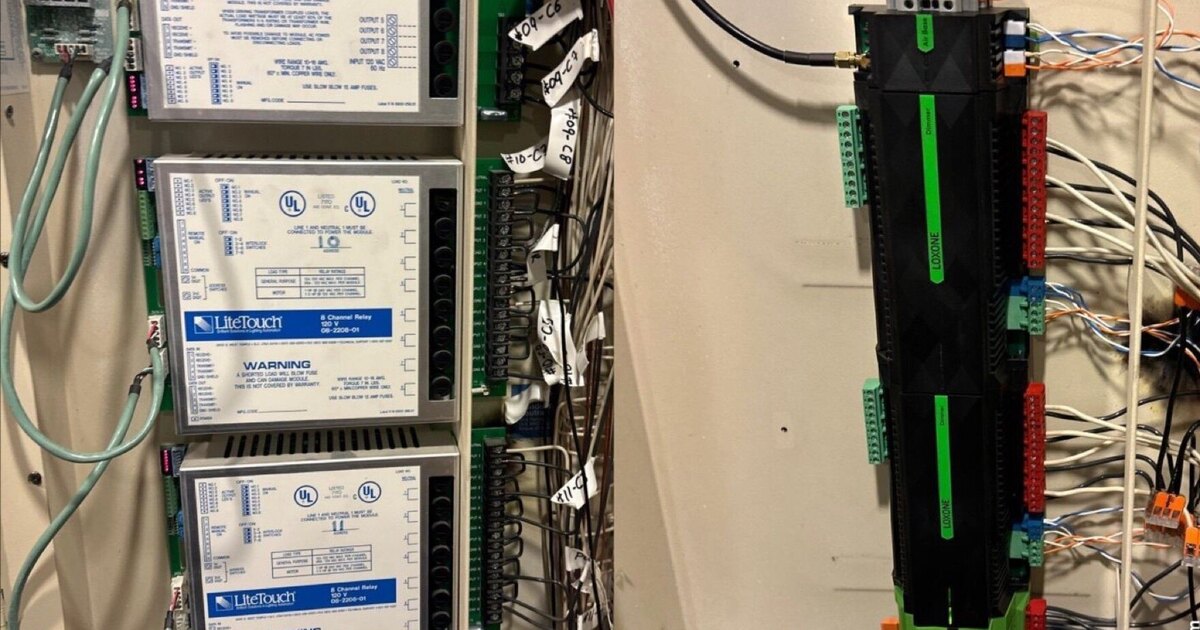
LOXONE is an open-protocol building automation platform that replaces the entire GRX control layer — including LP dimming panels — with LOXONE hardware installed in your electrical room. If you’re not yet familiar with the platform, What Is LOXONE? gives you the full picture before comparing it against Lutron options.
The LP panel trade-off with LOXONE: LP dimming panels cannot be retained in a LOXONE migration. The panels communicate via Lutron’s proprietary protocol on the control side, which LOXONE does not support. This is a confirmed research gap — there is no known LOXONE-compatible interface for LP panels as of May 2026. In a LOXONE replacement, LP panels are substituted with LOXONE Dimmer Extensions (0–10V or phase dimming), Relay Extensions, or DALI/DMX gateways. The existing line-voltage fixture circuits — from panel breakers to fixtures — are fully retained. The conduit work and circuit pulls stay in place. Only the control hardware in the rack changes.
Why this is still often the better path: For buildings where LP panels are also aging (15–25 years old, cycling commercial loads), the panels were likely to need replacement within the next 5–7 years anyway. Replacing them now with LOXONE Extensions removes the most common failure mode on the Lutron side, and the total replacement cost often comes in lower than the Quantum/server/licensing stack when compared over 5 years.
Platform Comparison: LOXONE vs. Lutron Quantum vs. Lutron Athena
| Factor | LOXONE | Lutron Quantum | Lutron Athena |
|---|---|---|---|
| Retain LP dimming panels | No (replace with Extensions) | Yes (via HQ-HWI-LX) | Yes (converts to QS) |
| Ongoing licensing fees | None | Per-link software keys | None confirmed |
| On-site server required | No (Miniserver is self-contained) | Yes (dedicated PC/server) | No (cloud-hosted) |
| Internet dependency | No (fully local) | Partial | Yes (cloud) |
| Open protocol support | DALI, DMX, KNX, Modbus, BACnet | QS proprietary | QS proprietary |
| Native BMS integration | Yes (BACnet IP/MSTP, Modbus) | Via middleware | Via middleware |
| Mobile app cost | Included, no subscription | Requires server infrastructure | Cloud app, included |
| HVAC + shading + access control | Native single platform | Separate integrations | Separate integrations |
| Energy reporting | Built-in | Quantum analytics (add-on) | Built-in |
| Ketra compatibility | No | No | Yes |
| Typical 5-year TCO (mid-size building) | Lower | Higher (server + licensing) | Moderate |
What Does the LOXONE Replacement Process Look Like?
Step 1: On-Site Assessment (2–4 hours)
A Grizzly Tec technician documents every GRX zone, traces LP panel circuits to fixtures, audits existing conduit and low-voltage wiring, inventories integration interfaces, and identifies any load type mismatches (particularly LED driver compatibility). We photograph the electrical room rack and map all wiring homerun paths.
Step 2: System Design
We produce a zone-by-zone migration plan: LOXONE hardware bill of materials (Miniserver, Extensions, Touch Pure keypads, occupancy sensors), wiring reuse map, BMS integration spec, and commissioning schedule. For buildings with active operations, we include a phased installation sequence.
Step 3: Installation
LOXONE Miniserver and Extensions are rack-mounted in the existing electrical room space. Existing fixture circuit wiring is terminated to LOXONE outputs. New LOXONE Tree bus cabling replaces GRX control wiring to wall box locations. Touch Pure keypads are installed in existing wall boxes (same gang size in most cases). Work is phased by zone to maintain lighting in unaffected areas. Retrofit projects typically take 3–5 days, or 1–2 weeks for large buildings.
Step 4: Programming and Commissioning
LOXONE Config is used to program all zones, scenes, schedules, occupancy triggers, and daylight harvesting. BMS integration (BACnet or Modbus) is configured and tested with your facilities team. Energy reporting baselines are set.
Step 5: Handoff and Training
Your facility manager receives access to the LOXONE operator interface. We provide documentation of zone maps, scene assignments, and integration points. Unlike Lutron, you are not locked out of your own system — Grizzly Tec provides admin credentials and can train your IT staff on LOXONE Config.
What Does It Cost?
Commercial replacement costs vary significantly based on zone count, building type, and integration scope. For reference:
-
Lutron’s official Quantum upgrade path: ~$16,600 in material for a mid-size system (per published pricing), before labor, server hardware, and per-link software keys. Total installed cost for a 50-zone building typically runs $35,000–$65,000 depending on labor rates and complexity.
-
LOXONE replacement (no LP panel retention): Hardware cost is typically lower due to no server requirement and no licensing fees. Total installed cost for a comparable 50-zone building typically runs $25,000–$55,000. Buildings with significant HVAC, shading, or access integration scope see greater relative savings versus Lutron because those capabilities are included in the LOXONE platform.
Note on LP panel value: If your LP panels are genuinely in good condition and represent significant residual value, Lutron Quantum’s panel-retention path may produce a lower net cost despite higher hardware pricing. We will tell you honestly during the assessment whether your specific panels justify that calculation.
Why Grizzly Tec
Grizzly Tec is a LOXONE Partner since 2015 (Platinum today) based in Spring, TX, serving the greater Houston metro since 2012. We specialize in commercial building automation — not residential smart home upsells. For an overview of our work across Houston’s commercial and residential market, see our Houston smart home and building automation guide. We carry Texas security license #B-29733501 and have completed commercial lighting migrations in office, hospitality, restaurant, and institutional facilities.
We are not a Lutron dealer. We will not recommend LOXONE if Lutron Quantum is genuinely the better fit for your building. Our free 15-minute call carries no obligation.
Making the Decision
If any of the following are true, it’s time to act:
- A GRX control unit has failed and aftermarket parts are unavailable or cost-prohibitive
- LP panel relays are showing intermittent failures under commercial load
- Your AV or BMS integration has silently broken due to dropped GRX driver support
- LED retrofits are producing flicker or buzzing that workarounds haven’t resolved
- Your facilities team is manually overriding automation because the system is unreliable
- You need to add energy monitoring or BMS connectivity that GRX cannot support
Waiting for a catastrophic failure locks you into emergency replacement pricing and compressed timelines. An assessment now gives you the option to migrate on your schedule, in phases if needed, with competitive bids.
Ready to Replace Your GRAFIK Eye 4000?
Book a free 15-minute call with Grizzly Tec. We’ll document your existing system, identify your LP panel condition, and give you an honest comparison of LOXONE versus Lutron paths for your specific building.
Book a free 15-minute call or call us directly. We serve Houston, Spring, The Woodlands, Katy, Sugar Land, and surrounding areas.
Related Reading
Ready to discuss your smart home project?
Book a free consultation — we'll discuss your goals and outline options.
Book a Free ConsultationShare this article

Founder & Mechatronics Engineer
Daniel Lopez founded Grizzly Tec in 2012 and has designed and installed 1,000+ projects (audio, video, networking, security and automation), including 50+ LOXONE projects. A mechatronics engineer by training, he holds a Texas security license (B-29733501) and has been a LOXONE Partner since 2015 and a Platinum Partner today.