Lutron GRAFIK Eye Replacement Guide (All Series — 2026)
Which GRAFIK Eye series do you have?
You can identify your series in under 30 seconds. Look for the model number on the back of the wall unit, on the panel door inside your mechanical or IT room, or on the processor enclosure.
Residential dimmer on the wall — If you see a self-contained unit with multiple zone sliders or scene buttons mounted directly in a finished living space, that is almost certainly the GRAFIK Eye 3000 (model prefix GRX or GRX-3500). It was the go-to residential dimmer from the mid-1990s through the early 2000s.
Rack-mounted panel in a commercial IT closet or mechanical room — If you see a panel with a model number starting with GRX-4000 or the panel modules labeled LP (Link Panel), you have the GRAFIK Eye 4000, the commercial multi-zone platform designed for hotels, offices, restaurants, and mid-size facilities.
Multiple interconnected panels controlled from a central processor — If the system has separate panel hardware and a standalone processor or dedicated software PC, and the model reads G-5000 or G-6000, you have the GRAFIK Eye 5000/6000 centralized system. These were the enterprise-tier solution of the late 1990s and early 2000s.
Whole-building architectural system with touchscreens and a rack-mounted processor — If you see a model labeled G-7000 or GRAFIK 7000P, with wall-mounted touchscreen stations and a dedicated processor board, you have the GRAFIK Eye 7000. This is Lutron’s most capable — and most recently sunset — legacy platform.
If you are still unsure, the easiest path is a free 15-minute call. Grizzly Tec can identify the system from photos.
GRAFIK Eye 3000 (Residential)
The GRAFIK Eye 3000 was Lutron’s workhorse residential dimmer for roughly a decade. Installed in tens of thousands of custom homes between 1996 and 2005, it offered multi-zone scene control at a price point that made it the default spec for residential lighting designers working in the Houston luxury market.
The problem today: The 3000 and its successor the 3500 are fully discontinued. The end-of-sale for the GRX-3500 came around 2022–2023, and Lutron now routes any parts requests through its obsolete-parts program — multi-week lead times, premium pricing, and no guarantee of availability. Downstream, the GRAFIK Eye QS (the 3000’s intended upgrade path) is itself being wound down, as Lutron’s current Radio Ra 3 platform does not support GRX QS or WPM hardware. There is no Lutron path that preserves your existing 3000-series hardware.
The failure pattern: The most common failure is a dead dimmer module — individual zones go dark or flicker. Followed by power supply failure, which takes the entire unit offline. Keypads and wallstations fail mechanically (stuck buttons) and electronically (loss of RS-232 communication with the main unit). Once parts are unavailable, any of these failures becomes a full-system replacement trigger.
The LOXONE replacement: In most 3000-series homes, the low-voltage wiring running from the main unit to light fixtures is reusable. LOXONE Tree Dimmer Extensions replace the GRX unit in the electrical panel, existing keypads are swapped for LOXONE Touch Pure or NFC-enabled wallstations, and the homeowner gets scene control, occupancy automation, and app access — all running locally without a subscription. A typical single-family replacement runs 2–4 days for installation.
Full guide: Lutron GRAFIK Eye 3000 Replacement Guide — covers wiring reuse, hardware mapping, cost ranges, and what to expect on install day.
GRAFIK Eye 4000 (Commercial)
The GRAFIK Eye 4000 was Lutron’s commercial standard for restaurants, hotels, conference rooms, and office floors through the 1990s and 2000s. Its multi-zone LP (Link Panel) architecture let a single control system manage dozens of dimming zones from a centralized processor — a meaningful leap for its era.
The problem today: The 4000 series is discontinued. Lutron distributors tell facilities managers it is no longer stocked. Parts sourcing has moved entirely to secondary channels — eBay, salvage integrators, and occasional pull-from-decommissioned-system inventory. The facility manager who calls Lutron’s tech support line (1.800.523.9466) for GRX-4000 help gets routed to a “legacy systems” queue with no guarantee of resolution.
The commercial pain points: Downtime is the core issue. A hotel ballroom or restaurant dining room that loses lighting mid-service has real revenue consequences. Facilities staff who’ve lived through one failure event are not interested in a “wait for parts” solution. Equally significant: the Lutron upgrade path (Quantum or Athena) requires a dedicated server for Quantum’s web/mobile application, plus per-link software licensing keys. IT departments running lean commercial infrastructure push back hard on single-purpose server requirements.
The LOXONE replacement: LOXONE replaces the GRX-4000 panel by panel without requiring a server. The Miniserver handles lighting, HVAC, shading, and access control in a single DIN-rail enclosure. Open-protocol support — DALI, DMX, KNX, Modbus, BACnet — means existing third-party fixtures and sensors integrate directly. No subscription. Energy reporting is built in, giving facilities managers the dashboard visibility the GRX-4000 never provided.
Full guide: Lutron GRAFIK Eye 4000 Replacement Guide — covers panel-by-panel migration, Quantum vs LOXONE TCO comparison, and phased installation for occupied buildings.
GRAFIK Eye 5000/6000 (Centralized)
The GRAFIK Eye 5000 and 6000 were Lutron’s centralized, whole-building lighting control platforms of the late 1990s and early 2000s. Where the 4000 managed a floor or zone, the 5000/6000 tied together multiple panel systems under a single processor with a proprietary software interface — the standard for large commercial builds, campus facilities, and multi-building institutional projects.
The problem today: Lutron issued an official End of Life and End of Maintenance notice for the GRAFIK 5000/6000 on May 16, 2014. As of May 2026, these systems are 12 years past their manufacturer EOL date. There are no Lutron-supplied parts, no Lutron technical support, and no firmware updates of any kind. The legacy software that managed these systems originally ran on dedicated PCs; Lutron’s workaround for aging OS compatibility (a VMware-based virtualization approach) also wound down around 2014.
What keeps them running: These were overbuilt systems designed for commercial lifespan. Many are still operational because the hardware is robust, facilities teams have learned to work around known failure points, and replacement has been deferred due to cost and disruption concerns. But every year that passes narrows the aftermarket parts window and increases the risk of a catastrophic failure with no recovery path.
The LOXONE replacement: The RS-485 wiring infrastructure that 5000/6000 systems used for inter-panel communication can frequently be evaluated for reuse with LOXONE Tree extensions — avoiding full conduit pulls in occupied buildings. LOXONE’s Miniserver Plus handles the scale that centralized 5000/6000 systems require, with native BACnet and Modbus support for integration with existing building management systems (BMS).
Full guide: Lutron GRAFIK Eye 5000/6000 Replacement Guide — covers centralized architecture migration, BMS integration, wiring reuse assessment, and phased replacement planning for large facilities.
GRAFIK Eye 7000 (Architectural — December 2024 Sunset)
The GRAFIK Eye 7000 was Lutron’s top-tier platform: a rack-mounted processor (model GRAFIK 7000P) driving distributed panel systems with architectural-grade dimming, programmable touchscreen wall stations, and whole-building scene management. It was specified for luxury estates, high-end hospitality, performing arts venues, and institutional projects where lighting design was a primary architectural consideration.
The problem today — and why it is urgent: Lutron issued a hard sunset for the GRAFIK 7000 in December 2024. As of May 2026, you are 17 months past the end of manufacturer support with zero Lutron-provided repair path. A single processor board failure (model numbers 470-1932 or 470-2742) takes the entire system down. Lutron will not supply the part, will not provide technical support, and has no certified upgrade path that preserves existing 7000-series hardware. The only current source for replacement processors is eBay — pulled from decommissioned systems, unwarranted, and decreasing in availability monthly.
The stakes: Owners of 7000-series systems are operating the most sophisticated legacy lighting platform made by Lutron. These systems controlled not just dimming levels but architectural lighting sequences, daylighting integration, and multi-room scene choreography. The replacement has to deliver equivalent capability — not a regression.
The LOXONE replacement: LOXONE’s Miniserver Plus, paired with DALI and DMX extensions, replicates the 7000’s scene logic, zone granularity, and touchscreen control. LOXONE Nano and Touch Pure wallstations replace 7000-series keypad stations. For luxury residential owners, the no-subscription model and local-control architecture are significant: the system runs without an internet connection, without Lutron cloud dependency, and without annual licensing fees.
Full guide: Lutron GRAFIK Eye 7000 Replacement Guide — covers processor-level architecture, DALI/DMX migration, touchscreen replacement, and the urgency case for acting before a failure event forces a crisis replacement.
Why LOXONE is the replacement platform of choice
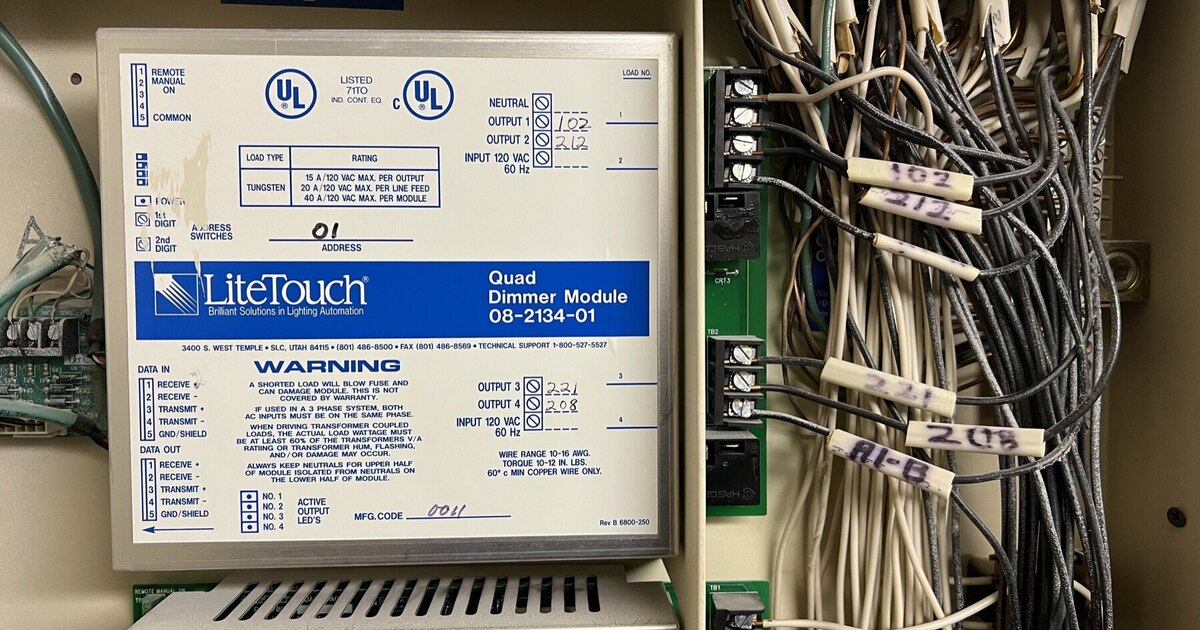
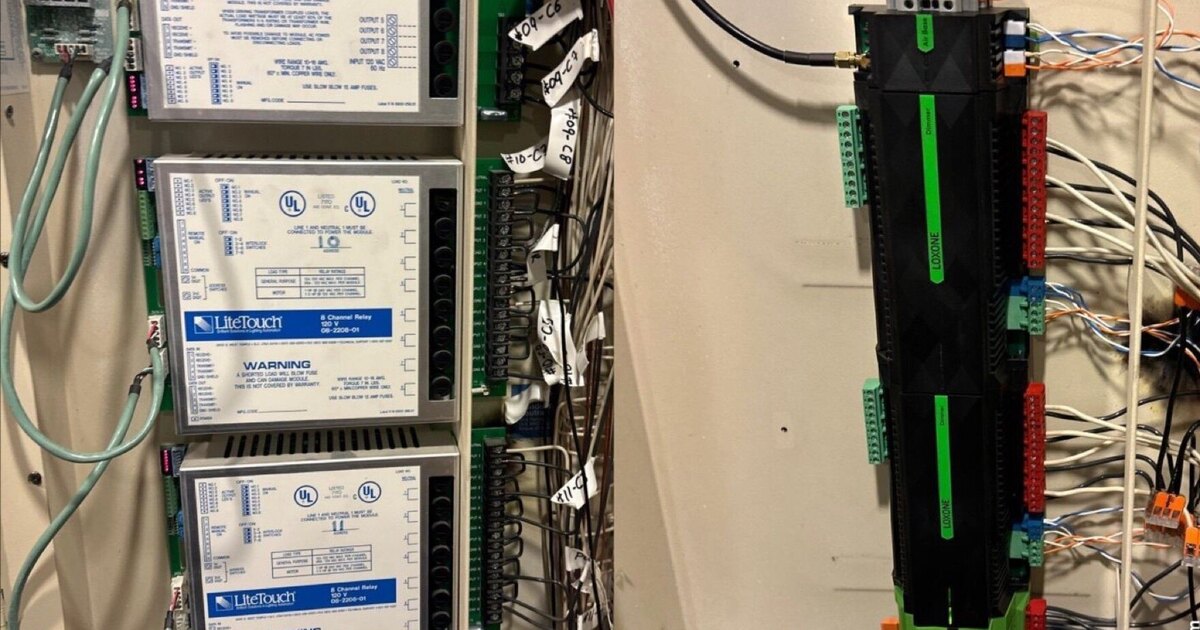
Grizzly Tec has been a LOXONE Partner since 2015 and is a Platinum Partner today. With 1,000+ projects since 2012 (audio, video, networking, security and automation), including legacy lighting-control replacements like LiteTouch, Vantage, and Touché — LOXONE is the right replacement architecture for every GRAFIK Eye series listed in this guide. The reasons are consistent across residential and commercial projects:
Local control, no subscription. The LOXONE Miniserver processes all logic on-site. There is no Lutron cloud, no annual license, no per-link software key. The system runs during internet outages. Owners retain full admin access without going through a dealer.
Open-protocol support. LOXONE speaks DALI, DMX, KNX, BACnet, Modbus, and a broad set of IP protocols natively. That means existing DALI-ballasted fixtures, third-party sensors, and building management systems integrate directly — without middleware, without proprietary gateways, without proprietary upgrade kits.
Single platform for the full building. Lighting, HVAC, shading, irrigation, access control, security, and audio — all managed from one Miniserver. GRAFIK Eye systems only controlled lighting. LOXONE replaces the lighting control layer and extends into every other building system.
Verified wiring reuse. In the majority of GRAFIK Eye projects, the existing low-voltage wiring is reusable. Grizzly Tec’s assessment process verifies wiring type, condition, and routing before any hardware is ordered. Confirmed reuse eliminates conduit work, reduces labor cost, and shortens installation time.
What every replacement project has in common
Whether the starting point is a 3000-series residential unit or a 7000-series architectural processor, every GRAFIK Eye replacement follows the same core sequence:
Wiring assessment first. Before any hardware is specified, Grizzly Tec maps existing wiring — panel locations, zone counts, cable type (Cat5, RS-485, home run vs. daisy-chain), and condition. This determines which runs are reusable and where new pulls are required.
Phased installation. In occupied homes and commercial buildings, we complete zone-by-zone or room-by-room work so the building is never fully dark. Critical zones (main entry, kitchen, safety lighting) are completed first. The old system typically remains operational on unchanged zones until the cutover is complete.
No-subscription positioning. Every project includes a handoff document and owner training session. The owner receives admin credentials, scene programming logic, and a documented wiring diagram. No dealer dependency for day-to-day operation.
Admin handoff. LOXONE Config — the programming environment — is documented and handed to the owner or their facilities team. After commissioning, LOXONE clients get support through LoxPilot; other systems we install are serviced by on-site visit, quoted in advance. The system is designed to run independently. Every project also comes with a plain-English manual (built with LoxManuals) and optional AI-powered support through LoxPilot.
Houston market context
Each GRAFIK Eye series maps to a specific segment of the Houston market:
GRAFIK Eye 3000 installations concentrate in residential neighborhoods built or extensively renovated between 1995 and 2008 — Memorial, Tanglewood, Meyerland, Sugar Land subdivisions, and older Katy-area custom homes. The original spec was often a home theater or master bedroom lighting control project that later expanded.
GRAFIK Eye 4000 systems are found in Houston’s hospitality corridor, older office towers in the Energy Corridor, Greenway Plaza, and Galleria-area commercial properties built or renovated in the 1990s and early 2000s. Restaurant groups with multiple locations frequently have the 4000 across their portfolio.
GRAFIK Eye 5000/6000 was specified for large institutional and campus projects — university buildings, hospital facilities, and large office campuses across the Houston metro. The Texas Medical Center and major university campuses in Houston have documented 5000/6000 installations reaching EOL.
GRAFIK Eye 7000 was specified for the highest tier of residential and commercial projects — River Oaks estates, high-end hospitality in the Galleria and Downtown corridors, and custom builds in Carlton Woods and The Woodlands. These are the projects where the lighting design was a named architectural deliverable, not a commodity spec.
Next steps
If your GRAFIK Eye system is already failing, or if you are in a planning phase before a failure event forces a crisis replacement, the starting point is a free 15-minute call.
Grizzly Tec serves the Houston metro — Spring, The Woodlands, Conroe, Tomball, Cypress, Katy, Sugar Land, Memorial, River Oaks, and surrounding areas.
Call (281) 203-9292 or book a free 15-minute call online to schedule.
Each series-specific guide below has additional technical detail, cost breakdowns, and the LOXONE-to-GRAFIK-Eye hardware mapping for your project:
Ready to discuss your smart home project?
Book a free consultation — we'll discuss your goals and outline options.
Book a Free ConsultationShare this article

Founder & Mechatronics Engineer
Daniel Lopez founded Grizzly Tec in 2012 and has designed and installed 1,000+ projects (audio, video, networking, security and automation), including 50+ LOXONE projects. A mechatronics engineer by training, he holds a Texas security license (B-29733501) and has been a LOXONE Partner since 2015 and a Platinum Partner today.