The Complete Guide to Replacing Your Lutron GRAFIK Eye 3000 (2026)
If you’re searching for this guide, your scenes have probably stopped working or a dimmer is buzzing. Here’s what actually happened and what to do.
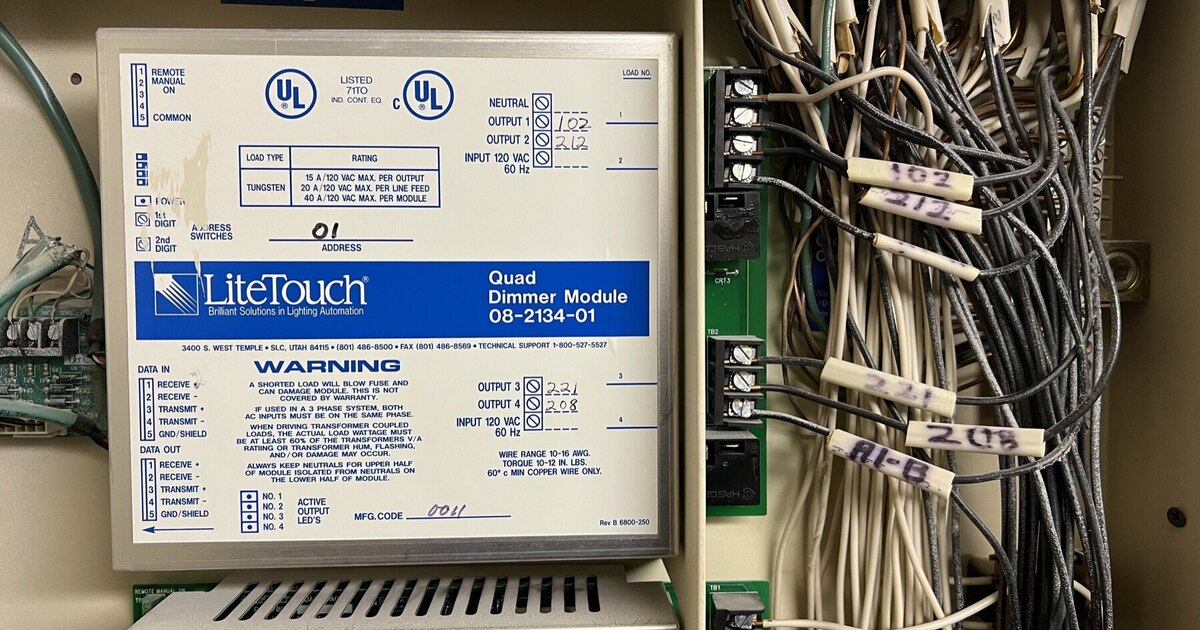
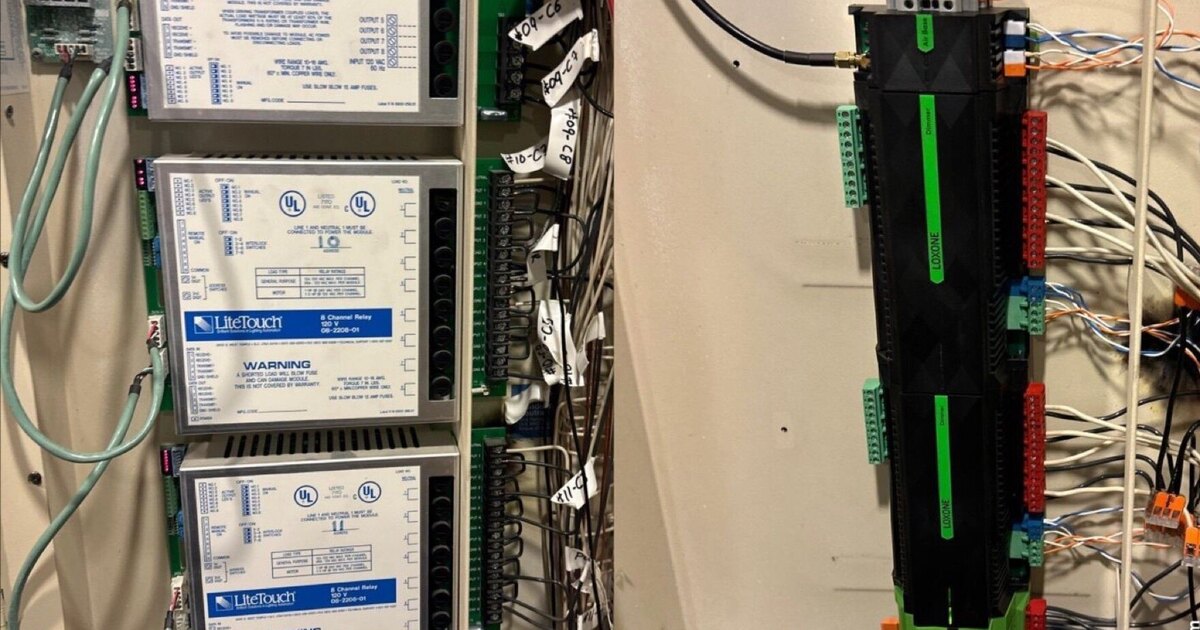
The Lutron GRAFIK Eye 3000 series was the dominant residential lighting control system in custom Houston homes built between 1995 and 2005. Memorial, West University Place, River Oaks, The Woodlands — these neighborhoods are full of GRX-3104 and GRX-3106 units that have now been in service for 20 to 30 years. Owners of other discontinued lighting platforms from that same era — LiteTouch being the most common — are navigating the same dead-end repair situation. They were excellent systems for their era. They are now at end of life, and the failures you’re experiencing are predictable and well-documented.
This guide explains what broke, what your options are, and why LOXONE is the replacement that reuses the most of what you already have.
What Is the GRAFIK Eye 3000 Series?
The GRAFIK Eye 3000 is a family of self-contained, wall-mounted dimmer controllers manufactured by Lutron Electronics. Unlike modern smart home systems — where a central processor controls remote dimmers — the GRX is a hybrid: the dimmer hardware, scene memory, and keypad buttons are all built into a single wall box unit.
The main model lineup:
| Model | Zones | Sub-series | Notes |
|---|---|---|---|
| GRX-3102 | 2 | 3100 | Entry-level, manual programming only |
| GRX-3103 | 3 | 3100 | Confirmed discontinued at all distributors |
| GRX-3104 | 4 | 3100 | Most common residential unit |
| GRX-3106 | 6 | 3100 | Standard in home theaters and great rooms |
| GRX-3502 | 2 | 3500 | PC-programmable, RS-232 capable |
| GRX-3504 | 4 | 3500 | Confirmed discontinued, no distributor stock |
| GRX-3506 | 6 | 3500 | Top-tier unit; 1% dimming increments, PC-programmable |
The 3100 sub-series is programmed by pressing physical buttons on the unit itself — no software, no laptop, no backup file. The 3500 sub-series added RS-232 and PC programming via Lutron’s GRX-PRG software, which no longer runs on modern 64-bit Windows without a virtual machine.
Multiple GRX units connect via a 12V MUX bus: a 2-conductor Class 2 twisted pair (#18 AWG) in a daisy-chain topology. A single system can link up to 8 units covering up to 48 zones. Remote scene selection comes via GRX-WS wallstations — accessory keypads that plug onto the MUX bus and mount in standard wall boxes.
Why Did It Stop Working?
Twenty to thirty years of operation is a long time for any electronic device. The GRAFIK Eye 3000 fails in predictable ways, and the failures have been accelerating since LED retrofits became standard.
The LED Incompatibility Problem
This is the most common complaint we hear from homeowners in Memorial and West University right now. You replaced your incandescent or halogen bulbs with LEDs — a perfectly reasonable upgrade — and suddenly your lights buzz, flicker at low levels, or won’t dim smoothly at all.
The GRAFIK Eye 3000 was designed for incandescent and halogen loads with a minimum of 40 watts per circuit. LED bulbs draw 5 to 10 watts each and operate on fundamentally different current characteristics. The Triac dimmer stages inside the GRX unit use leading-edge (forward-phase) switching, which worked perfectly with the resistive loads it was designed for. LED drivers — even “dimmable” ones — often conflict with this switching topology, producing:
- High-pitched buzzing from filter inductors reacting to LED current spikes
- Flicker at low dim levels due to insufficient minimum load
- Initialization failures with certain LED driver chips (Philips “Classic” dimmable LEDs are a confirmed problem with GRX-3106 units)
No LED brand swap will fully solve this. The GRX hardware is not field-upgradeable. This is a hardware incompatibility, not a configuration error.
Scene Memory Loss
The GRX-3100 stores scene presets internally with no backup mechanism. Any power interruption can corrupt those presets. Owners who lose their scenes face re-programming manually via the physical buttons using a process that is tedious, undocumented in the home, and increasingly something no installer is willing to do for a discontinued product.
The GRX-3500 has PC backup via GRX-PRG — but GRX-PRG is a 16-bit Windows application that does not run on modern 64-bit operating systems without compatibility layers. Even if your installer has the software, running it requires a legacy machine or a virtual environment.
Internal Dimmer Burnout
The line-voltage Triac dimmer boards inside the GRX wall box have been heat-cycling for two to three decades. The symptoms: a zone that no longer dims at all (stuck full-on or full-off), or a zone that drops out intermittently. When one zone fails, the entire control unit often needs replacement — and as of 2026, there is no reliable source for new units.
Wallstation and MUX Bus Failures
GRX-WS wallstations develop non-responsive buttons, dead backlighting, and surface yellowing after 20+ years. More serious: oxidized connections on the 12V MUX bus can take entire sections of a multi-unit system offline. If your home has two or more GRX units linked together and one section stops responding, a corroded terminal is often the culprit — but tracing it without knowing the original wiring topology is difficult.
Parts: What’s Available in 2026
There is no authorized supply chain for new GRAFIK Eye 3000 hardware.
- Lutron distributors (Gexpro, Rexel, Platt Electric): GRX-3103, GRX-3504, and most other models listed as “discontinued” with no stock
- Lutron Obsolete Parts Program: Lutron sometimes builds small runs of discontinued products on request. Lead time is weeks to months; pricing is premium; it is not a reliable ongoing source
- eBay / secondary market: The only practical source for working GRX units and wallstations. Condition is unpredictable, no warranty, and supply is shrinking as the installed base ages
- Radwell (radwell.com): Lists some GRX variants for purchase or repair with a 2-year warranty. Limited selection and not widely available
A broken GRX unit should be treated as a trigger for full system replacement, not repair.
Your Replacement Options
When a GRAFIK Eye 3000 fails, you have three paths.
Option 1: Lutron GRAFIK Eye QS or RA3
Lutron’s current product lines — GRAFIK Eye QS and RadioRA 3 — are capable systems. If you want to stay in the Lutron ecosystem, these are the right choices. The tradeoff: GRX fixture wiring terminates at the wall box, and the new Lutron systems use distributed low-voltage dimmers (in-wall or in-panel). That means your existing 120V wiring to fixtures is reusable, but the new system architecture is meaningfully different. Expect similar installation scope to a LOXONE migration and similar pricing from a Lutron dealer.
Option 2: Standard Dimmers (No Automation)
Replace each GRX zone with a conventional standalone dimmer. This eliminates all scene control and automation capability. For a home with 4 GRX units and 20+ controlled circuits, you’ll spend significant labor time installing and wiring individual dimmers, and you’ll lose the features that made the original system worth installing. This is the lowest-cost option on paper but gives up the most.
Option 3: LOXONE (Recommended)
LOXONE replaces the GRAFIK Eye 3000 with a modern, locally-processed automation platform — and it has the highest rate of wiring reuse of any replacement path. Here’s why we recommend it specifically for GRX homeowners. If you’re new to LOXONE, our plain-English guide covers how the platform works before you evaluate it.
Why LOXONE for GRAFIK Eye 3000 Replacement
Your Line-Voltage Wiring Is Fully Reused
The 120V wiring that runs from each GRX wall box to your light fixtures is standard line voltage. LOXONE Dimmer Extensions — installed in or near your main electrical panel — terminate directly to these existing circuits. No new wire runs to fixtures. No drywall demolition. The fixture wiring you already have goes straight to the LOXONE dimmer outputs.
The MUX Bus May Become a Tree Bus
The GRX-3000 interconnects its units via a 2-conductor #18 AWG Class 2 twisted pair: the MUX bus. LOXONE Tree operates on similar low-voltage wiring. In many installations, the existing MUX bus conduit runs — which are already in the walls between GRX locations — can be reused to run Tree bus wire to LOXONE Touch Pure keypads. This eliminates the most disruptive part of any renovation: fishing new wire through finished walls.
Where existing conduit runs work, we pull Tree bus wire alongside the old MUX conductors. Where they don’t, the LOXONE Touch Pure Flex (wireless, battery-powered) eliminates new wire runs entirely.
Touch Pure Keypads Fit Existing Wall Boxes
The GRX control unit occupies a deep wall box because its dimmer stages are built in. After the GRX unit is removed, that depth works in your favor. LOXONE Touch Pure keypads are low-voltage devices that mount in a standard Decora-style wall box. The deep box the GRX occupied usually gives more than enough clearance. Occasionally an adapter plate is needed; we assess every location during the site visit.
The result: the same wall box locations, similar-profile keypads, and a dramatically more capable system behind them.
LOXONE Adds What the GRAFIK Eye Never Had
The GRX-3000 has no network connection, no app, no voice assistant integration, and no ability to respond to schedules, occupancy, or external conditions. Everything the system can do lives in those 16 scene presets.
LOXONE changes that entirely — without changing the fundamental experience of pressing a button to set a scene:
- Smartphone app (iOS and Android): full control from anywhere, native app, no subscription
- Amazon Alexa and Apple HomeKit: voice control without any third-party bridge hardware
- Occupancy integration: LOXONE Motion Sensor Tree in home theater and media room locations
- Scheduling: sunrise/sunset scenes, circadian-tuned lighting, vacation modes
- Expandability: the same Miniserver and Tree bus that control lighting can later integrate shading, climate, audio zones, and security — no parallel systems, no additional hubs
What the Replacement Process Looks Like
Step 1: Assessment
We map every GRX zone to its fixture circuit and load type. We document the MUX bus runs, count wallstation locations, verify LED fixture compatibility with LOXONE dimmer specs, and assess wall box depth at each location. You get a written scope and estimate before any work begins.
Step 2: Design
We configure the LOXONE system in software: zone assignments, scene definitions, keypad button layouts, schedule logic, and any integration with existing HVAC or AV systems. This happens off-site, so there’s no downtime during design.
Step 3: Install (3–5 Days Typical)
Panel work first: LOXONE Miniserver and Dimmer Extensions installed and wired to existing fixture circuits. Then wall box work: GRX units removed, Tree bus wire pulled where needed, Touch Pure keypads installed. Work is phased room by room to keep lighting functional in unaffected zones throughout the installation.
A note on LED verification: if any circuits still drive fixtures with legacy magnetic low-voltage (MLV) transformers, we verify compatibility with LOXONE’s forward-phase dimmer outputs during this phase and replace any incompatible transformers. This is the moment to get LED right once, correctly.
Step 4: Program and Commission (1–2 Days)
All scenes re-established from scratch in LOXONE Config on a laptop. We walk through each room with you, set preferred lighting levels, and document the configuration file. You receive a backup of the configuration, and LOXONE Config admin access if you want to make changes yourself later.
Step 5: Training and Handoff
We walk your household through the app and keypads. Anyone who interacted with the old GRX wallstations can operate the new system within minutes — the button-press-to-scene experience is identical. The difference is everything that happens behind it.
How Much Does It Cost?
Most homes in Memorial, West University Place, and The Woodlands with standard GRAFIK Eye 3000 installations run $10,000–$22,000 all-in for a LOXONE migration — hardware, installation, and programming.
Main cost drivers:
- Number of zones (GRX-3102 replacement is less than GRX-3506)
- Number of GRX units linked (1-unit vs. 3-unit MUX systems)
- Whether motorized shading or audio are in scope
- LED fixture compatibility (driver swaps add cost)
- Square footage and wall box count
If your home has one or two GRX-3104 units (4 zones each) and standard LED-compatible fixtures, you’ll be toward the lower end. A full Memorial estate with GRX-3506 units, multiple MUX-linked zones, shading, and audio integration will be toward the top.
We provide a written estimate before work begins.
Making the Decision
The GRAFIK Eye 3000 was a well-built system that has outlived its supply chain, its LED compatibility, and in many cases its dimmer components. If yours is buzzing, losing scenes, or failing zone by zone, the repair path is closed.
The question for most homeowners isn’t whether to replace it — it’s which replacement preserves the most of what was already installed. LOXONE does that better than any other path for GRX homes: line-voltage wiring stays, wall box locations stay, the button-press interface stays, and you gain two decades of capability the original system never offered.
If you’re in Spring, Memorial, West University, River Oaks, The Woodlands, Sugar Land, or anywhere in the Houston smart home market, we offer a free 15-minute call to get started. We’ve been a LOXONE Partner since 2015 (Platinum today) and have replaced lighting control systems across the region.
Ready to Replace Your GRAFIK Eye 3000?
Book a Free 15-Minute Call — we’ll talk through your system and wiring compatibility. No commitment, no sales pressure.
Related Reading
Ready to discuss your smart home project?
Book a free consultation — we'll discuss your goals and outline options.
Book a Free ConsultationShare this article

Founder & Mechatronics Engineer
Daniel Lopez founded Grizzly Tec in 2012 and has designed and installed 1,000+ projects (audio, video, networking, security and automation), including 50+ LOXONE projects. A mechatronics engineer by training, he holds a Texas security license (B-29733501) and has been a LOXONE Partner since 2015 and a Platinum Partner today.