LOXONE Compared to LiteTouch: An Honest Look
Looking to replace your LiteTouch system? See our LiteTouch Replacement Guide for a complete overview of the upgrade process, costs, and what to expect.
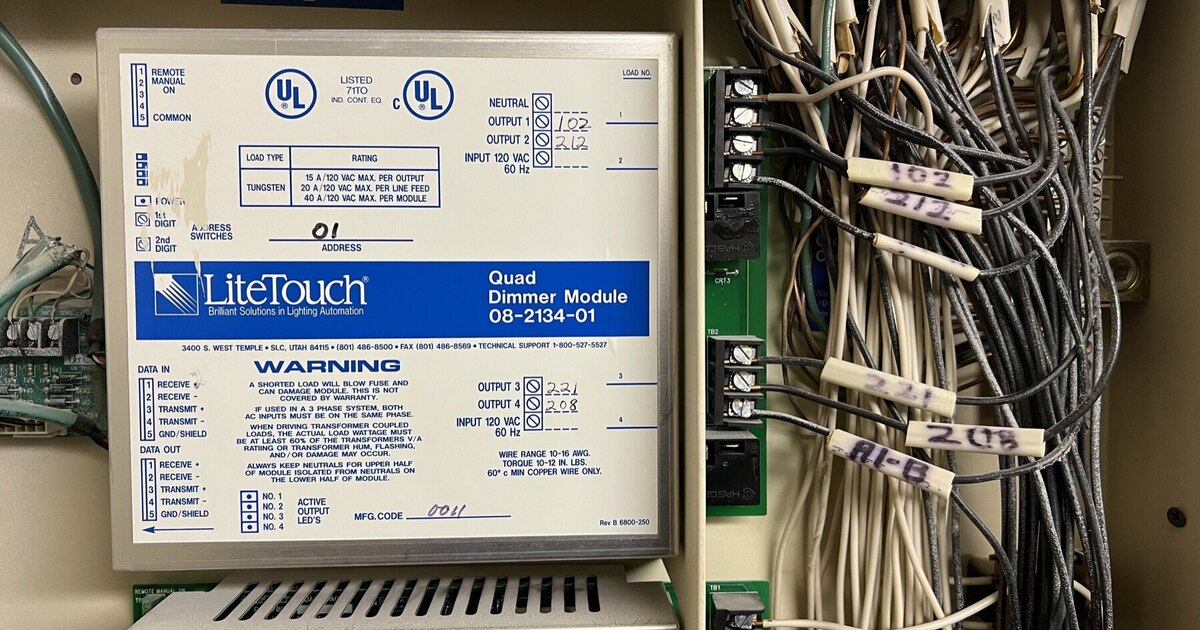
Comparing LOXONE to LiteTouch isn’t really a comparison between two current competitors — LiteTouch hasn’t been sold or supported since Savant discontinued the line in 2015. It’s a comparison between where lighting control technology was two decades ago and where it’s gone since, viewed through the lens of a homeowner deciding what replaces a system that served them well for a long time.
That framing matters, because it’s tempting to write off an older platform as simply “outdated” without asking what it actually did right. LiteTouch earned its reputation the hard way, in an era when panelized lighting control was itself a novelty. The fair comparison acknowledges that, then explains — on the merits, not the adjectives — where a modern platform like LOXONE has genuinely moved the category forward.
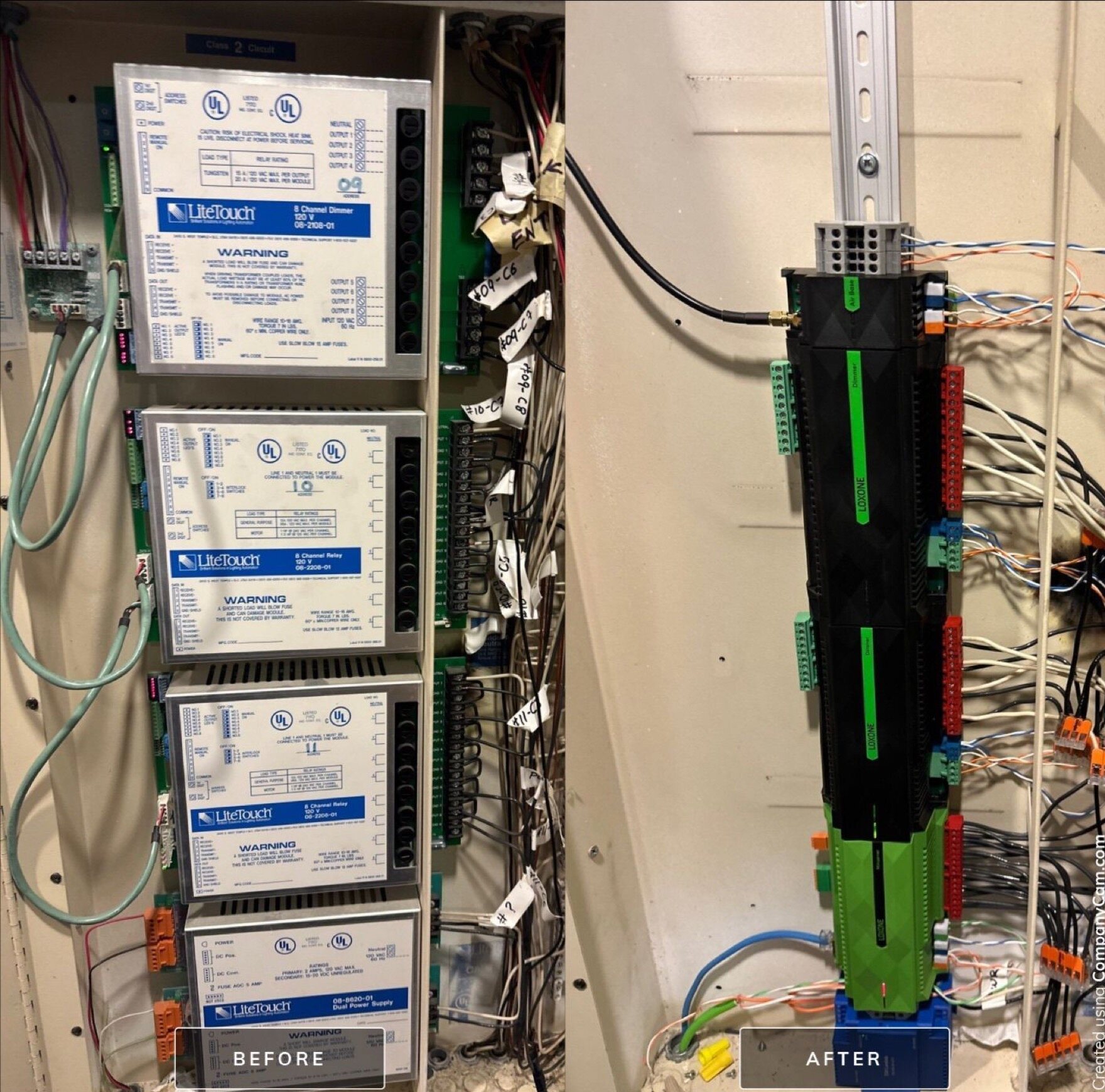
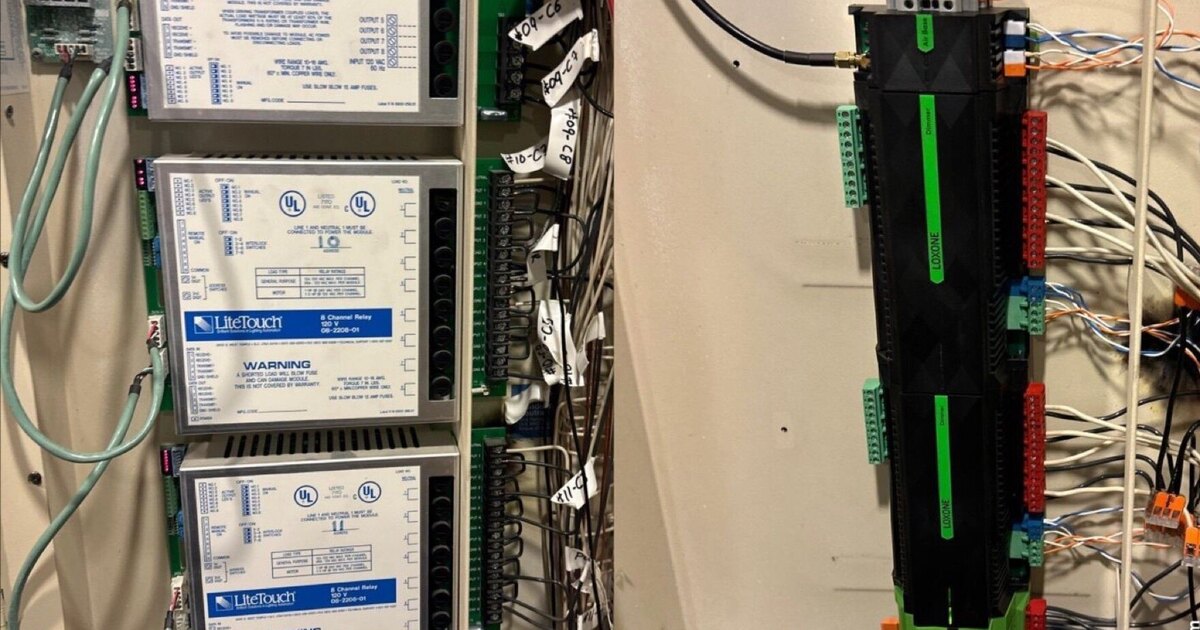
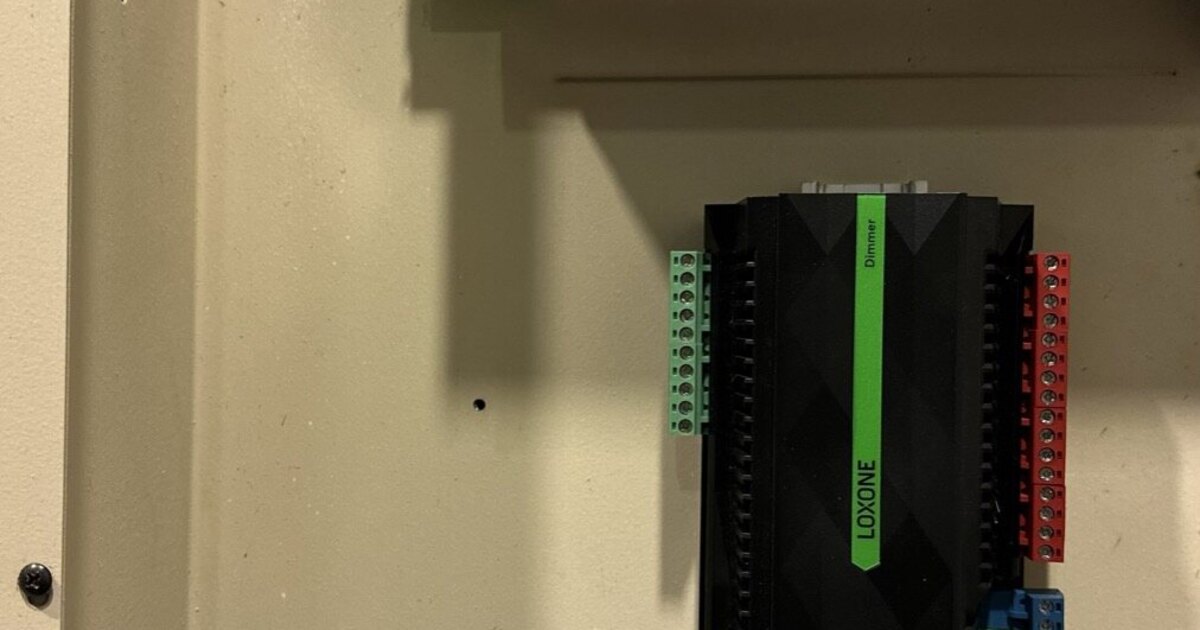
Same house, same circuits, same wiring. Four LiteTouch modules and a dual power supply on the left; a Miniserver with two extensions on the right.
Functionality
LiteTouch was purpose-built for one job: lighting control, done well. Dimming, switching, and scene recall across a panelized system was its entire scope, and within that scope it was dependable. That focus was a legitimate strength — a system that does one thing without trying to be everything tends to do that one thing reliably.
LOXONE was designed with a broader scope from the start. Beyond lighting, the same Miniserver and Tree bus architecture extends to motorized shading, climate control, energy monitoring, security integration, and audio — all coordinated through one system rather than several independent ones. For a homeowner who only ever wants lighting control, this breadth is optional, not mandatory. For a homeowner who’s tired of juggling separate apps and separate installers for each system in their home, it’s the practical reason to look at LOXONE in the first place.
Customization
LiteTouch scenes were genuinely customizable at install time — an installer could program dimming levels, groupings, and timing to match a homeowner’s preferences precisely. The tradeoff was that changing them later typically meant calling that installer back with programming hardware, since the customization lived in the panel, not in an interface the homeowner could reach directly.
LOXONE keeps the same idea — programmed scenes triggered by a button press — but moves the editing into the homeowner’s hands through the LOXONE app. Scene changes that once required a service call can, for most adjustments, be made directly. The underlying customization depth is similar; the difference is who has to be present to use it after installation day.
Interface
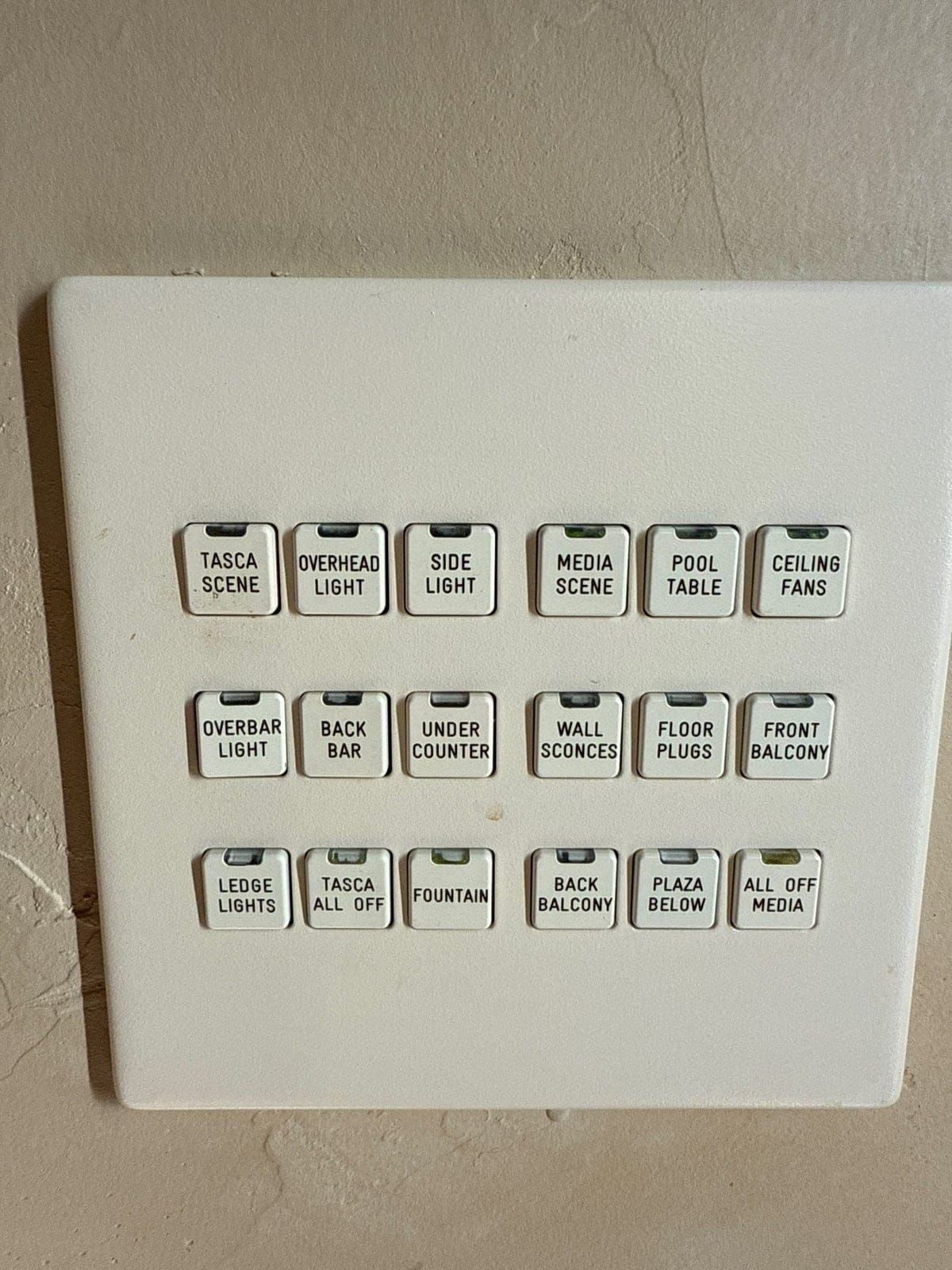
LiteTouch’s interface was its keypads — physical buttons, clearly labeled, mounted at every relevant location in the home. It was intuitive because it didn’t try to be anything more than buttons that did what they said.
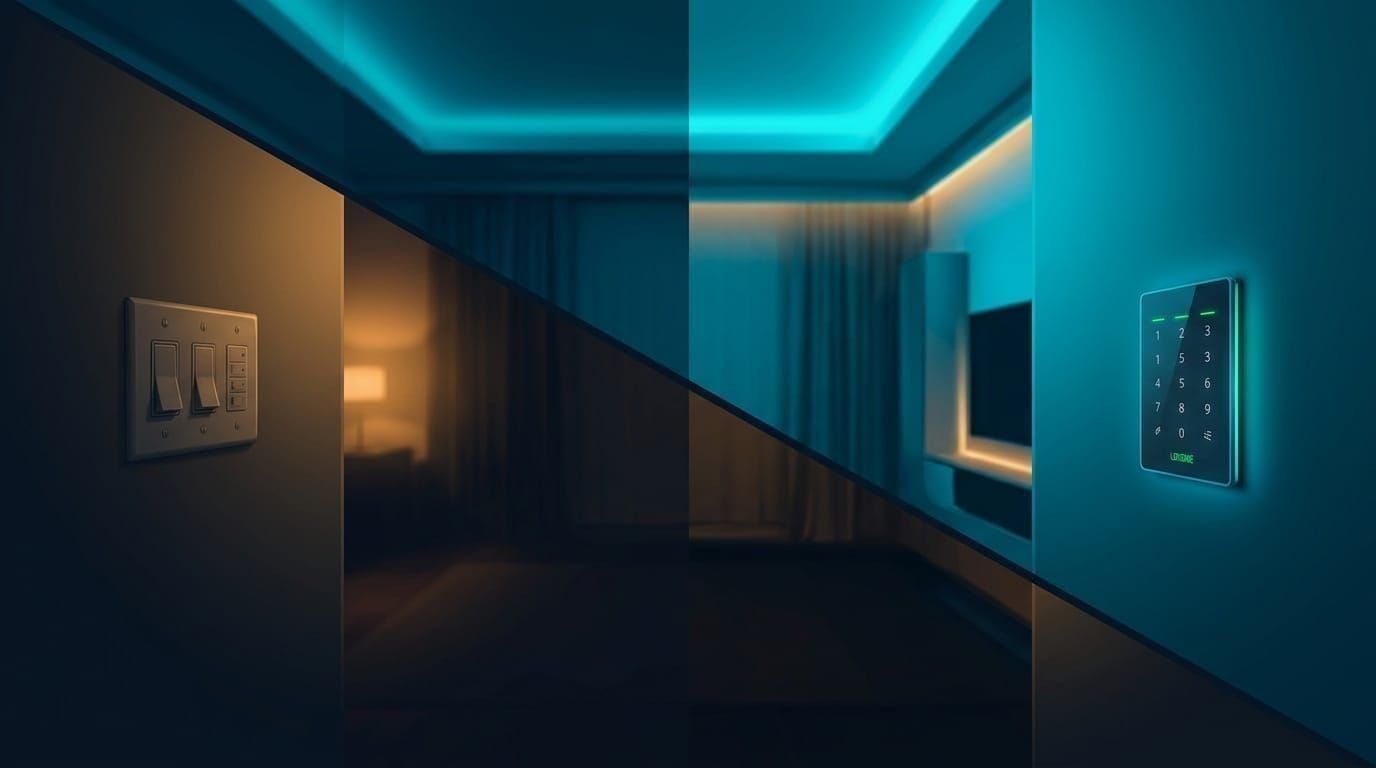
LOXONE keeps that same keypad-first interaction as the default — a LOXONE Touch or Touch Pure switch is still a physical wall control you press — while adding options on top: a smartphone app for remote and scheduled control, voice assistant integration, and automated triggers based on time or sensor input. Nobody is required to use the app. The keypad-first experience that made LiteTouch approachable is preserved; it’s just no longer the only option.
Reliability
This is where the comparison stops being close. LiteTouch hardware, however well it was engineered, has had no manufacturer support, no firmware updates, and no reliable parts supply since 2015. A failed module today is a hunt through secondary markets, not a warranty claim. That’s not a criticism of the original engineering — it’s simply what happens to any electronics platform a decade after its manufacturer walks away. If you’re trying to determine whether a specific fault is fixable before deciding between repair and replacement, our troubleshooting guide walks the actual diagnostic path.
LOXONE is under active development, with ongoing firmware updates, an established distributor network, and a company with every incentive to keep supporting the hardware it sells today. Reliability, in the long-term sense that matters for a system you’re planning to live with for another fifteen or twenty years, isn’t really about which system fails less often on day one — it’s about which one has a manufacturer behind it when something eventually does fail.
Cost of Ownership Over Time
This is a comparison LiteTouch owners rarely get to make directly, because it only becomes visible after years of living with a discontinued platform. In the years right after Savant discontinued LiteTouch in 2015, the practical cost of ownership was low — the systems kept working, and most homeowners didn’t think about it. As parts availability has thinned out over the following decade, that cost has shifted into a different form: a failed module or keypad that once meant a routine service call now means a search for secondary-market hardware of uncertain condition, or a decision to replace the affected section of the system entirely.
LOXONE’s cost of ownership runs the opposite direction. LOXONE releases firmware updates on an ongoing basis. Replacement hardware, when it’s ever needed, comes through an active distributor network rather than a secondary market. There’s no subscription fee layered on top of the hardware to keep core lighting and automation functioning. The upfront cost of a LOXONE system is a real number to budget for — but it’s a number that buys ongoing support, not a countdown to the next unsupported failure.
Interface Depth Beyond the Keypad
It’s worth being specific about what LOXONE’s app actually adds, since “there’s an app” undersells the practical difference. Beyond remote control, the LOXONE app is where scene editing happens — dragging dimmer levels for each circuit in a scene and saving the result, without a technician present. It’s also where schedules live: sunrise- and sunset-tied lighting, vacation-mode lighting that varies day to day to look occupied, and time-based scenes that used to require a programmable timer module, if LiteTouch supported the specific behavior a homeowner wanted at all. None of this replaces the keypad as the everyday way most households actually interact with their lighting — it sits alongside it, for the subset of situations where a phone in hand is more convenient than a wall nearby.
Can I Upgrade the Look of My LiteTouch Keypads?
Yes — Grizzly Tec replaces the multi-button beige LiteTouch keypads with LOXONE Touch Pure keypads, including the Touch Pure Flex, which has a flush glass surface and backlit scenes in place of a bank of labeled buttons. Because a single Touch Pure often replaces the function of several LiteTouch keypads, some walls end up with fewer, cleaner-looking controls than before.
The wiring behind the wall usually determines which Touch Pure keypads reuse your existing cable directly: runs with 3 conductors get LOXONE Air keypads, powered over two of the existing wires and communicating by radio, while runs with 4 or more conductors get LOXONE Tree keypads.
Integration
LiteTouch integrated with other systems to a limited degree, largely through contact closures and basic relay-level connections handled by a separate integrator. It wasn’t designed as an open platform, because in its era, home systems mostly weren’t.
LOXONE was built for broader integration from the ground up: native compatibility with Amazon Alexa and Apple HomeKit, and a Miniserver architecture designed to coordinate multiple building systems — lighting, shading, climate, security, audio — without stacking separate hubs and separate apps for each one.
Where This Leaves You
If you’re comparing LOXONE to LiteTouch today, you’re not really choosing between two current products — you’re deciding what replaces a system that’s reached the end of its supportable life. On that comparison, LOXONE wins on the merits that matter for a long-term decision: active support, a broader platform to grow into, and homeowner-level control over the scenes and settings that used to require a service call. LiteTouch wasn’t a bad system. It was a good system whose manufacturer moved on, and that’s the actual reason a comparison is necessary at all.
For the mechanics of the transition itself — what wiring carries over and what doesn’t — see how easy it is to replace LiteTouch with LOXONE. If you’re just starting to research your options, our piece on what happened to LiteTouch covers the discontinuation in more depth, and how the LiteTouch system worked is a useful primer if you’re not sure what’s actually installed in your home.
Ready to Compare Options for Your Specific System?
Book the $450 Diagnostic (credited 100% to your project) — we’ll evaluate your existing system and give you a straight answer on whether LOXONE is the right fit. Grizzly Tec has been a Loxone Partner since 2015 (Platinum today), holds Texas security license #B-29733501, and serves Spring, TX and the greater Houston area.
Ready to discuss your smart home project?
Book a free consultation — we'll discuss your goals and outline options.
Book a Free ConsultationShare this article

Founder & Mechatronics Engineer
Daniel Lopez founded Grizzly Tec in 2012 and has designed and installed 1,000+ projects (audio, video, networking, security and automation), including 50+ LOXONE projects. A mechatronics engineer by training, he holds a Texas security license (B-29733501) and has been a LOXONE Partner since 2015 and a Platinum Partner today.