Why LOXONE Beats WiFi Smart Home Devices Every Time
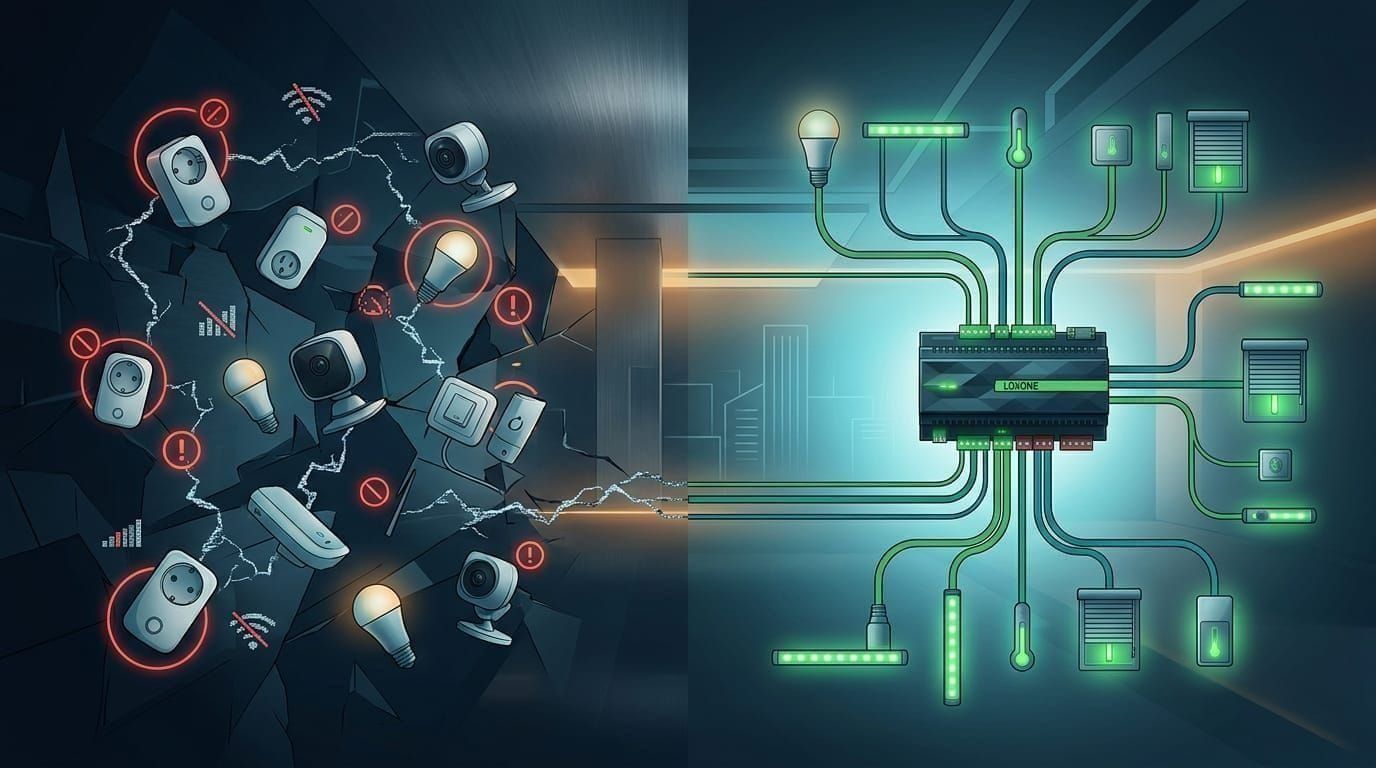
LOXONE beats WiFi smart home devices because it runs locally on a wired Miniserver, works during internet outages, requires no subscriptions, and does not compete with your home network for bandwidth. For Houston homeowners who want a system that works reliably during power flickers, storms, and vendor shutdowns, LOXONE’s wired architecture is the practical long-term choice.
Why Is LOXONE More Reliable Than WiFi Devices?
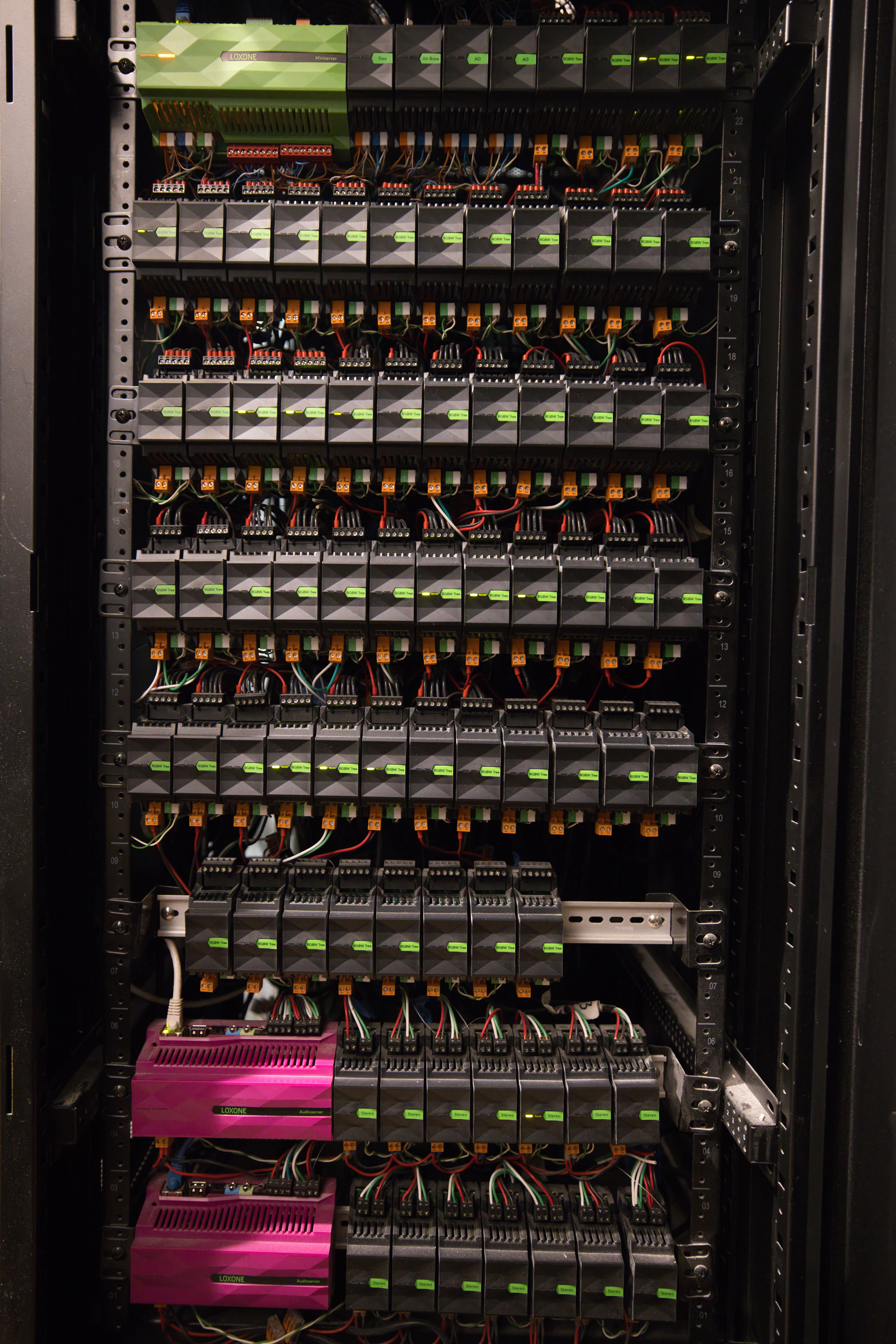
WiFi devices depend on your home network. When the router hiccups, devices go offline. When you have 40+ smart gadgets competing for bandwidth, response times lag. LOXONE uses a central Miniserver and wired (or hybrid) device communication. Lighting, shades, and climate logic run locally. No cloud round-trip, no “device unavailable” at the worst moment.
In a power outage, many WiFi devices lose their state. When the power comes back, you might find lights stuck on, thermostats reset, or routines broken. LOXONE systems are designed to recover predictably. Your scenes and schedules live in the Miniserver; once power is restored, the system returns to the state you expect.
Why Do WiFi Smart Homes Have Subscription Problems?
With most consumer WiFi ecosystems, you’re renting your smart home. Features get paywalled, brands discontinue products, and apps change or disappear. You don’t own the experience — the vendor does.
You buy the hardware and the software. There are no monthly fees for basic automation. You get full administrator access and the admin password. Your home, your rules.
LOXONE is different. If you want to add a device or change a scene in five years, you can — without asking a company for permission.
What Happens to Your Smart Home When the Internet Goes Down?
Houston storms can knock out internet for hours. With cloud-dependent WiFi devices, your smart home often becomes dumb: no app control, no automations, no voice. LOXONE runs the core logic locally. Lighting, shades, and climate continue to work from the keypads and the LOXONE app on your local network. You’re not dependent on the cloud for day-to-day operation.

What Are Real Scenarios Where WiFi Smart Homes Fail?
Power blip: WiFi bulbs and hubs can take minutes to reconnect; some need to be power-cycled. LOXONE devices on the Tree bus reconnect quickly and reliably.
Vendor discontinues product: We’ve seen popular brands kill entire product lines. Cloud services get shut down. With LOXONE, you’re not tied to a single consumer brand’s roadmap. The platform is built for long-term use in real homes.
Too many devices: A house full of WiFi plugs, bulbs, and sensors can overwhelm even a good router. LOXONE uses a dedicated low-voltage bus for critical devices, so your automation doesn’t compete with Netflix and Zoom.
What’s the Bottom Line on LOXONE vs WiFi?
WiFi devices are fine for a single room or a quick experiment. For a whole-home system you plan to live with for years — especially in a market like Houston where reliability and ownership matter — LOXONE’s wired approach is the smarter choice. You get reliability, no subscriptions, local control, and admin access you actually own.
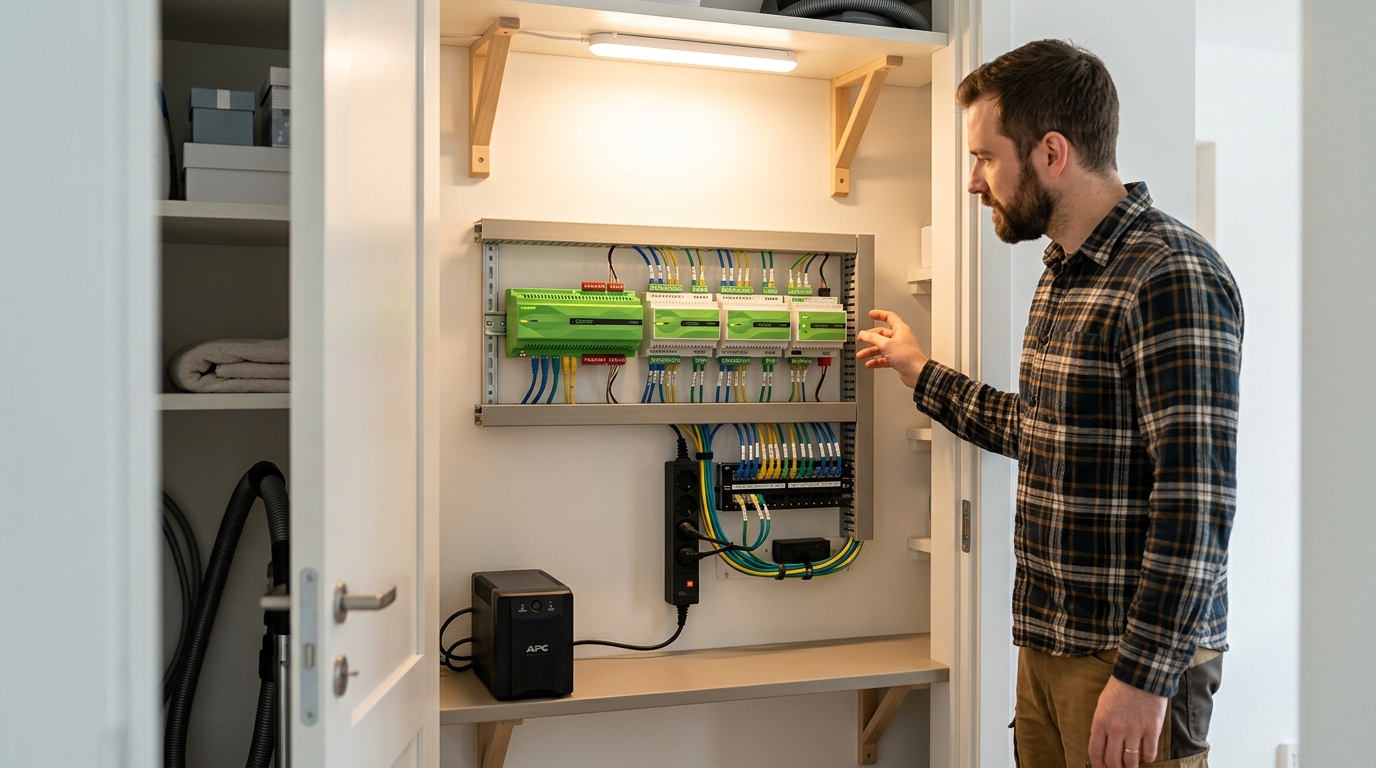
Ready to see what a LOXONE system can do in your home? Book a free consultation with our team in Spring, TX. We’ll walk you through your goals and outline options — no obligation.
Related Reading
- Learn what LOXONE offers as a complete platform for whole-home automation
- See what smart home automation costs in Houston in 2026
Ready to discuss your smart home project?
Book a free consultation — we'll discuss your goals and outline options.
Book a Free ConsultationShare this article

Founder & Mechatronics Engineer
Daniel Lopez founded Grizzly Tec in 2012 and has designed and installed 1,000+ projects (audio, video, networking, security and automation), including 50+ LOXONE projects. A mechatronics engineer by training, he holds a Texas security license (B-29733501) and has been a LOXONE Partner since 2015 and a Platinum Partner today.