
Smart Home Automation in Houston: What You Need to Know (2026)
Houston is one of the fastest-growing smart home markets in Texas, driven by new construction in Spring, The Woodlands, and Katy, and a strong retrofit market in Memorial, River Oaks, and West University. A professional smart home system in Houston typically costs between $8,000 and $50,000+ depending on scope. Here’s what you need to know before starting your project.
The greater Houston area has a unique combination of factors that make it an active market for smart home automation: a high volume of new construction, a large inventory of existing custom homes with aging technology, intense summer heat that drives climate automation interest, and homeowners who value both technology and practical functionality.
Whether you’re building new in a master-planned community, renovating a home in the Heights, or replacing a failing LiteTouch system in a Woodlands estate, this guide covers the landscape of smart home automation in Houston as it stands in 2026.
What Are Houston Homeowners Installing in 2026?
Based on our project data across hundreds of Houston-area installations, here’s what homeowners are prioritizing this year:
Lighting control remains the top priority. Whole-home dimming, scene-based control, and automated schedules are the foundation of nearly every project. Houston homeowners consistently rank lighting as the feature that has the most impact on daily life. The ability to press one button and set an entire floor to the right mood — morning, evening, entertaining, movie night — is the gateway that makes everything else make sense.
Audio is the second most requested category. Multi-room audio with zone control has moved from luxury to expectation in the $400K+ new build segment. Homeowners want music in the kitchen, patio, master bath, and living areas — controlled from one app, not a collection of separate Bluetooth speakers scattered around the house.
Climate automation is growing fast. Houston’s extreme summer heat makes automated climate control particularly valuable. Smart thermostats are table stakes — LOXONE takes it further with zone-based climate management, humidity monitoring, and window-aware scheduling. When a sensor detects that your west-facing windows are getting direct afternoon sun, the system can close motorized shades and adjust the AC zone before the room heats up.
Motorized shading is gaining traction. Related to climate, motorized shades and blinds are increasingly popular in Houston homes. The combination of sun management, privacy, and convenience — especially in homes with large windows or two-story great rooms where manual shades are impractical — drives adoption.
Adaptive living and accessibility. An emerging category that’s gaining serious attention: automation designed to help people age in place or accommodate physical limitations. Voice-activated lighting, automated door locks, fall detection integration, and simplified single-button control allow homeowners to maintain independence. This is a category we’re investing in heavily at Grizzly Tec because the Houston area has a large population of homeowners planning to stay in their homes long-term.
New Build vs Retrofit: What’s Different?
This is one of the most important distinctions in smart home planning, and it significantly affects both cost and approach.
New Construction
Building a new home is the ideal time to install smart home automation. Here’s why:
Wire during rough-in. Before drywall goes up, your builder’s electrician (or our team in coordination with the builder) runs low-voltage cabling — LOXONE Tree bus wiring, Cat6 for network and audio, and speaker wire — to every keypad location, sensor location, and device throughout the home. This is dramatically cheaper than running wire after walls are closed because the labor is minimal when studs are exposed.
Design integration. When automation is planned from the start, keypad locations, sensor positions, speaker placement, and panel locations are part of the architectural design. The result is a cleaner installation with fewer compromises.
Cost-effectiveness. New construction automation typically costs 20-40% less than an equivalent retrofit because you’re not paying to open and repair walls, fish wire through finished spaces, or work around existing systems.
Builder coordination. Grizzly Tec works directly with Houston-area builders through our builder partnership program. We provide wire plans, coordinate with the electrical contractor, and schedule installation around the build timeline. For builders, offering smart home capability differentiates their product in a competitive market.
If you’re in the planning or pre-construction phase, talk to us before your builder starts framing. The cost of adding automation wiring during rough-in is a fraction of what it costs to add it later.
Retrofit (Existing Homes)
Retrofitting an existing home with smart home automation is absolutely possible — we do it regularly. The approach is different:
Assess existing wiring. Many Houston homes built in the 1990s-2010s have existing low-voltage wiring from legacy systems like LiteTouch, Vantage, or structured wiring panels. This wiring can often be reused for LOXONE Tree devices, significantly reducing the retrofit effort. Our LiteTouch replacement guide covers this in detail.
LOXONE Air for wireless. Where running new wire isn’t practical — perhaps in a completed bonus room, a detached garage, or an area where wall access is limited — LOXONE Air wireless devices fill the gap. Motion sensors, temperature sensors, window contacts, and certain switches are available in Air versions that communicate wirelessly with the Miniserver.
Hybrid approach. Most retrofit projects use a combination of wired and wireless. We wire what we can access easily (attic drops, panel locations, accessible wall cavities) and use Air devices where wiring would require significant wall repair. The homeowner experience is identical regardless of whether a device is Tree or Air.
Minimize disruption. Retrofit projects in occupied homes require careful planning to minimize disruption. We work room by room, protect finishes, and patch any wall penetrations to match existing texture and paint. The goal is that three months after installation, you can’t tell where we worked.
Realistic expectations. A retrofit will not always achieve the same device density as a new build. If running a wire to a specific location would require opening a finished ceiling or cutting through tile, we’ll recommend an Air wireless alternative instead. The result is the same — a fully functional smart home — but the behind-the-scenes approach may differ.
How Do You Choose a Smart Home Installer in Houston?
Houston has no shortage of companies offering smart home services — from large national integrators to one-person operations. Here’s what to look for and what to avoid:
What to Look For
Manufacturer certification. Does the company hold an active certification from the platform they install? Grizzly Tec is a LOXONE Gold Partner — the highest tier of LOXONE certification. This means we receive direct factory training, priority technical support, and access to the full product line. Ask any potential installer about their certification status and verify it.
A portfolio of completed projects. Ask to see completed installations. A reputable installer should be able to show you photos, case studies, or even arrange a tour of a completed project (with the homeowner’s permission). Our portfolio includes residential, commercial, and builder projects across the Houston area.
The ownership model. Ask this specific question: “After installation, do I get the admin password and full programming access?” If the answer is anything other than “yes,” understand what you’re giving up. Some platforms and some dealers intentionally withhold full access to create ongoing dependency.
Post-install support options. What happens six months after installation when you want to change a scene or add a device? Is there a support plan? What are the rates for service calls? Grizzly Tec offers Grizzly Care service plans for ongoing support, but they’re optional — because you have admin access, you can also make changes yourself or hire any LOXONE partner.
References. Ask for references from recent clients, specifically from projects similar to yours (new build, retrofit, LiteTouch replacement). Call them. Ask about the experience, communication, timeline accuracy, and post-install support.
Red Flags
Proprietary systems with no admin access. If an installer recommends a system where you cannot access the programming tools or change dealers, proceed with extreme caution. You’re signing up for a long-term dependency relationship.
Mandatory subscriptions for basic features. Monthly fees for cloud storage, remote access, or automation features that should be included with the hardware. Ask: “What stops working if I cancel the subscription?”
No clear scope of work. A legitimate proposal should itemize equipment, labor, programming, and clearly define what’s included and what’s not. Vague “smart home package” quotes with no detail are a warning sign.
Pressure to decide immediately. Smart home automation is a significant investment. Any installer who pressures you into signing before you’ve had time to compare options and check references is prioritizing their timeline over your interests.
What Houston-Specific Factors Affect Your Smart Home?
Houston’s climate, geography, and housing market create some unique considerations for smart home automation:
Heat and humidity. Houston’s summers are brutal — consistently 95-100°F with high humidity from May through September. This makes climate automation particularly valuable. Automated shading that responds to sun position can reduce solar heat gain by 40-60%. Zone-based climate control ensures you’re not overcooling rooms that aren’t in use. Humidity monitoring prevents mold issues in closets, wine rooms, and media rooms. Your automation system should be designed with Houston’s climate as a primary factor, not an afterthought.
Storm preparedness and backup power. Houston experiences severe storms, flooding, and occasional extended power outages. A well-designed smart home should include consideration for:
- Backup power for the automation system (UPS for the Miniserver at minimum)
- Storm mode scenes that close all shades, set lighting to minimum, and arm security
- Water leak sensors in vulnerable areas (under sinks, near water heaters, in laundry rooms)
- Integration with whole-home generators if present
LOXONE’s local processing is an advantage here — when your internet goes down during a storm, your automation continues running normally.
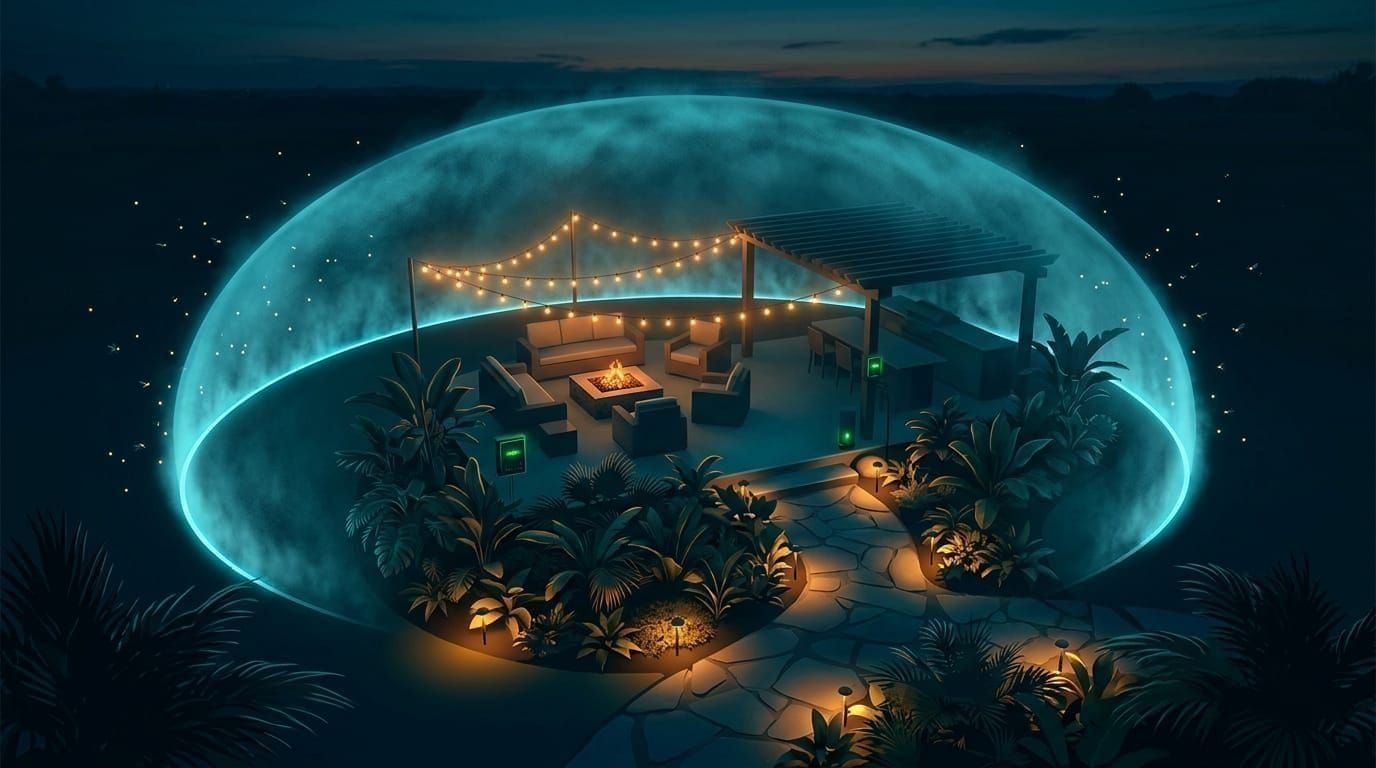
Large lot sizes and outdoor automation. Houston-area homes, particularly in Spring, The Woodlands, and Katy, often sit on larger lots with significant outdoor living spaces. Outdoor automation — landscape lighting, pool control, irrigation, patio audio, and mosquito misting integration — is a meaningful part of many projects. The outdoor living season in Houston runs roughly 8-9 months per year, which justifies the investment in outdoor automation more than it might in northern climates.
HOA considerations in master-planned communities. Many Houston-area homes are in master-planned communities with HOA restrictions. Smart home installations should comply with any exterior modification rules. Good news: most automation is invisible from the outside. Motorized shades, exterior speakers, and security cameras may need HOA approval depending on your community. We help navigate this during the design phase.
Builder standards in new communities. Builders in communities like The Woodlands, Bridgeland, Sienna, and Cross Creek Ranch increasingly offer structured wiring and smart home packages as options. These builder-provided packages vary widely in quality. Some are genuinely useful foundations; others are minimal wiring that barely qualifies as “smart home ready.” If your builder offers a smart home package, have an independent automation company (like Grizzly Tec) review it before you commit. We regularly help homeowners evaluate builder-provided options and supplement where needed.
How Much Does a Smart Home Cost in Houston?
We’ve written a detailed cost guide — What Does a Smart Home Actually Cost in Houston? (2026 Guide) — but here’s the summary:
Starter ($8,000 - $15,000): Lighting control focused. LOXONE Miniserver, dimmers, and keypads in main living areas. Basic scene control and scheduling. A solid foundation you can expand later.
Mid-range ($15,000 - $25,000): Lighting plus motorized shades in key rooms, thermostat integration, and potentially a couple of audio zones. The system starts feeling like a true whole-home experience.
Whole-home ($25,000 - $50,000+): Full LOXONE installation with lighting, multi-zone audio, motorized shades, climate integration, and keypads or touch panels throughout. This is the scope common in new builds and major renovations in the Houston $500K+ home segment.
New construction vs. retrofit pricing. Expect to pay 20-40% less for a new construction installation compared to an equivalent retrofit scope. The savings come from reduced labor — running wiring in open walls versus fishing cable through finished spaces.
These ranges reflect installed cost including equipment, labor, programming, and commissioning. Every home is unique, so we provide custom quotes after a free consultation.
Getting Started
Smart home automation is a meaningful investment that affects your daily life for years to come. The best outcomes start with clear goals and a realistic understanding of what’s involved.
Here’s what we recommend:
- Define your priorities. What matters most — lighting control, audio, climate, security? Starting with clear priorities helps us right-size the system for your budget.
- Consider your timeline. If you’re building new, engage us during the design phase — before framing starts. If you’re retrofitting, any time works, but plan for 4-8 weeks from consultation to completion.
- Book a consultation. We’ll discuss your goals, review your home or plans, and provide a detailed proposal with no obligation.
Ready to Start Your Smart Home Project?
Book a Free Consultation — Grizzly Tec is based in Spring, TX and serves the greater Houston area. We’ll meet at your home or review your plans remotely.
You can also explore our services, learn about our builder partnerships, or see our work across Houston-area locations.
Related Reading
- What Is LOXONE? The Smart Home System Explained — Complete overview of the LOXONE platform
- Smart Home Cost Guide for Houston (2026) — Detailed pricing breakdown
- LOXONE vs Savant vs Control4 (2026) — Platform comparison
- Book a Consultation — Start your project
Ready to discuss your smart home project?
Book a free consultation — we'll discuss your goals and outline options.
Book a Free ConsultationShare this article

Mechatronics Engineer & LOXONE Gold Partner
Daniel Lopez is the founder of Grizzly Tec in Spring, TX. With a background in mechatronics engineering and over 10 years in smart home automation, he has designed and installed LOXONE systems across the greater Houston area. LOXONE Gold Partner since 2015.